

Payroll governance is how an organisation keeps pay accurate, lawful and consistent. It covers the processes, checks and oversight that sit around payroll. When governance is strong, people are paid correctly and on time. When it weakens, small errors spread fast.
Large businesses and enterprise organisations feel this pressure more than SMEs. They have more pay rules, data feeds and people making changes. They also face closer scrutiny from employees, auditors and HMRC. Good governance keeps payroll steady as the organisation changes and grows.
What is payroll governance?
Payroll governance means the rules and controls that shape how payroll is run. It sets who can change data, who approves payments and how checks are done. It also sets how evidence is kept for payroll audits and investigations. Governance is not a one-off policy, it’s the rules that define how payroll operates every cycle.
Governance covers more than just pay calculation. It includes Pay As You Earn (‘PAYE’), National Insurance Contributions (‘NICs’), pension contributions and reporting. It also covers data security and privacy under UK GDPR. And it makes accountability clear, so each stage has an owner.
Governance is also a leadership issue. Payroll mistakes can lead to penalties, back pay and reputational damage. They can also reduce employee confidence quickly. Large organisations can’t afford to treat governance as an afterthought.
Core principles of payroll governance in the UK
Payroll governance in the UK rests on clear, practical principles. These aren’t abstract ideals, but daily controls. They protect both employees and employer, while helping payroll stay audit ready.
The core principles include:
• Payroll compliance with law and guidance, including PAYE, National Minimum Wage (‘NMW’), National Living Wage (‘NLW’), Working Time rules, UK GDPR, automatic enrolment, off-payroll working rules (‘IR35’) and tips allocation rules that took effect on 1 October 2024
• Accuracy and timeliness, including correct deductions and on-time payment
• Data security and privacy, using access controls and secure handling
• Risk management, reducing the chance of penalties, disputes and loss of trust
Show me how to protect my business from payroll risks
Payroll governance in large organisations explained
In large organisations, governance is how payroll stays consistent across complexity. Enterprise payroll may cover thousands of employees and many pay groups. It might rely on several systems feeding data into payroll. Without strong payroll controls, small mistakes can scale into major issues.
Good governance creates order. It sets how data enters payroll, how exceptions are checked and how approvals work. It also sets how the employer can prove what happened, when and why. That proof matters if employee challenges pay or an external auditor asks questions.
Governance also connects to wider goals. Fair pay and transparency are part of how organisations build trust. Many employers link this work to environmental, social and governance (ESG) priorities. The important point is practical, consistent control.
Why payroll governance fails at scale
Payroll governance often breaks down when complexity outpaces control. Large employers may have dispersed teams, varied shift patterns, multiple sites, regional pay differences and local allowances. These factors increase the number of decisions payroll must handle.
Legacy systems are another common driver. Older payroll platforms may not integrate well with HR or Finance systems which can lead to manual re-keying of data. Every re-keyed change increases the risk of error and weakens the audit trail.
Manual processes are a weak point at scale. They rely on individual knowledge and individual discipline. When a key person is absent, checks can be missed.
Ownership gaps also cause failures. If responsibilities are spread across departments without clear lines, issues can sit in the gaps. Payroll then becomes the default fixer, even when the root cause sits elsewhere. That is expensive and it repeats.
Early warning signs of weak governance include:
• Frequent corrections and unexplained pay variances
• Missing, inconsistent or incomplete audit trails
• Late or inaccurate reporting to HMRC
• Growing reliance on manual checks and spreadsheet controls
• Rising employee queries after pay day
• More off-cycle payroll, with no clear trigger rules
See how to reduce governance errors in enterprise payroll
Enterprise payroll governance risks and their impact
Poor payroll controls create business risk, not just missed payments or admin errors. It affects compliance, cost, reputation and trust. It can also affect employee wellbeing, especially when underpayments take time to correct.
Compliance failures can be costly. The government publishes lists of employers identified by HMRC to have underpaid NMW. Investigations often lead to back pay for workers and financial penalties for the employer. These cases also draw unwanted media attention and reputational impact.
Penalty rules also matter. In NMW cases, penalties can be 200% of the arrears due. There’s a cap of £20,000 per worker and penalties can be reduced if the employer pays quickly. These details are important, because governance is about prevention, not clean-up.
Governance failures also create internal cost. Payroll teams spend more time firefighting and less time improving control. HR and managers spend more time dealing with complaints. Finance then has to unwind journals and correct forecasts. The organisation pays twice for the same weakness.
A simple operating model for payroll governance
Large organisations need clear lines of responsibility. Governance improves when ownership is visible and agreed. It also reduces finger-pointing when something goes wrong. A simple operating model helps.
A practical split of responsibilities looks like:
• HR owns contracts, starters, leavers and policy rules
• Managers own time approval, overtime approvals and local exceptions sign-off
• Payroll owns calculation, validation, RTI reporting and payment processing
• Finance owns funding, reconciliations, journals and payroll costing rules
• IT and Security own access controls, integrations and change control
• Internal Audit owns independent testing and assurance
This model doesn’t remove collaboration. It makes it clearer and escalation faster. It protects payroll teams from becoming the owner of upstream failures.
How payroll controls, approvals and audit trails should work
Controls are the backbone of payroll governance. They make payroll repeatable - not dependent on memory - and reduce fraud risk. In enterprises, controls need to be designed for volume.
Approvals should be structured. Each stage of payroll should have a defined role and sign-off. No single person should control the whole process. Segregation of duties reduces error risk and reduces fraud risk.
Audit trails are just as important. Every change should be logged with a user, time and reason. The record should show what changed and why. This evidence supports internal reviews and external audits.
Security is part of payroll governance, not a separate topic. System access should match job roles. Access should be reviewed regularly, including joiners, movers and leavers. Sensitive actions require stronger controls and stronger approvals.
Core controls for large employers include:
• Documented procedures and approval levels
• Segregation of duties across key tasks
• Role-based access with regular reviews
• Exception reports and variance checks each cycle
• Reconciliations between payroll, bank totals and Finance journals
• System audit logs for changes to pay, bank details and deductions
• Secure handling of payment files and release approvals
• Evidence retention for audits and disputes
Get expert help to review payroll governance
Controls by stage of the payroll lifecycle
A control list is useful, but placement matters. Controls work best when they sit at the right stage. This also helps the enterprise find weak points quickly. It turns payroll governance into a clear workflow.
Pre-payroll controls:
• Cut-off dates for HR changes and time approvals
• Starter and leaver checks, including right data completeness
• Validation for missing fields and unusual changes
• Clear ownership for each data feed
Processing controls:
• Gross-to-net variance checks against prior periods
• Exception reporting for outliers, missing data and sudden changes
• Sample checks on high-risk cases, like leavers and large adjustments
• Second checker review for sensitive changes
Payment controls:
• Maker-checker controls for payment file generation
• Separate approval for payment release
• Bank detail change controls and confirmation steps
• Secure file storage and restricted access
Post-payroll controls:
• Reconcile payroll totals to bank totals and Finance journals
• Confirm RTI evidence, including Full Payment Submission (FPS) timing
• Track queries and root causes, not only volumes
• Review what changed after cut-off and why
Metrics that show whether payroll governance is working
Enterprise payroll needs measures, not gut feel. Metrics reveal patterns that a busy team may miss. They also help leaders invest in the right fixes.
Useful governance measures include:
• Number of off-cycle payroll payments per 1,000 employees
• Percentage of records changed after cut-off
• Volume of payroll queries per pay cycle and top three causes
• Error rate by category, like hours, rate, bank details and deductions
• Time to resolve pay issues, measured in days
• Value and count of reconciliation differences
• Number of manual overrides and who approved them
• Number of failed or late data feeds from upstream systems
These measures should be reviewed monthly for trend control. The goal isn’t perfection, it’s visibility. Visibility leads to prevention.
An incident process for payroll issues
Even strong governance and payroll controls will face incidents. Employers need a repeatable response. It should be calm, consistent, documented and should protect employees who are affected.
A practical incident playbook includes:
• Triage severity and impact, then set a clear deadline
• Choose the fix route, whether off-cycle payroll or next main pay run
• Communicate clearly using one agreed message
• Record what happened, what changed and who approved it
• Confirm RTI reporting steps for any additional payments
• Capture root cause and corrective action to stop repeats
This is where employee communication matters. Silence causes escalation and a slow response causes distrust. A clear plan reduces both.
The role of technology in payroll governance at scale
Technology can strengthen governance when it supports control, not shortcuts. Modern enterprise payroll systems standardise workflows and reduce manual handling. They can also make audit trails clearer which improves consistency across teams and sites.
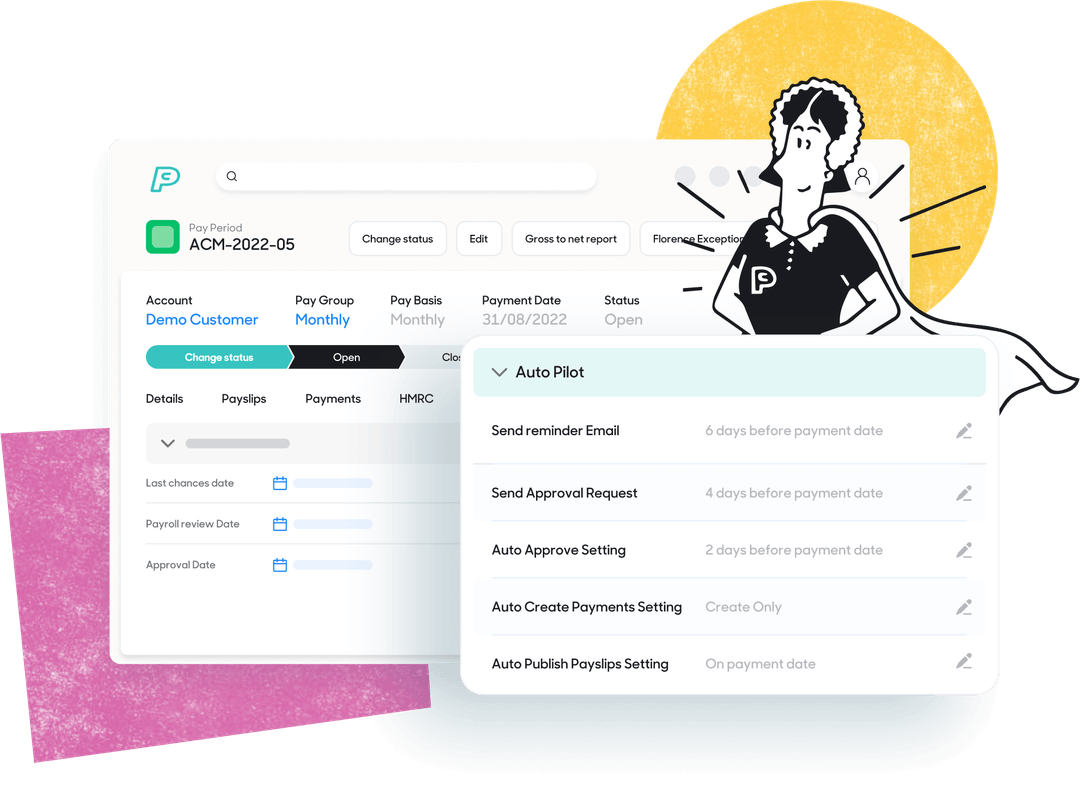
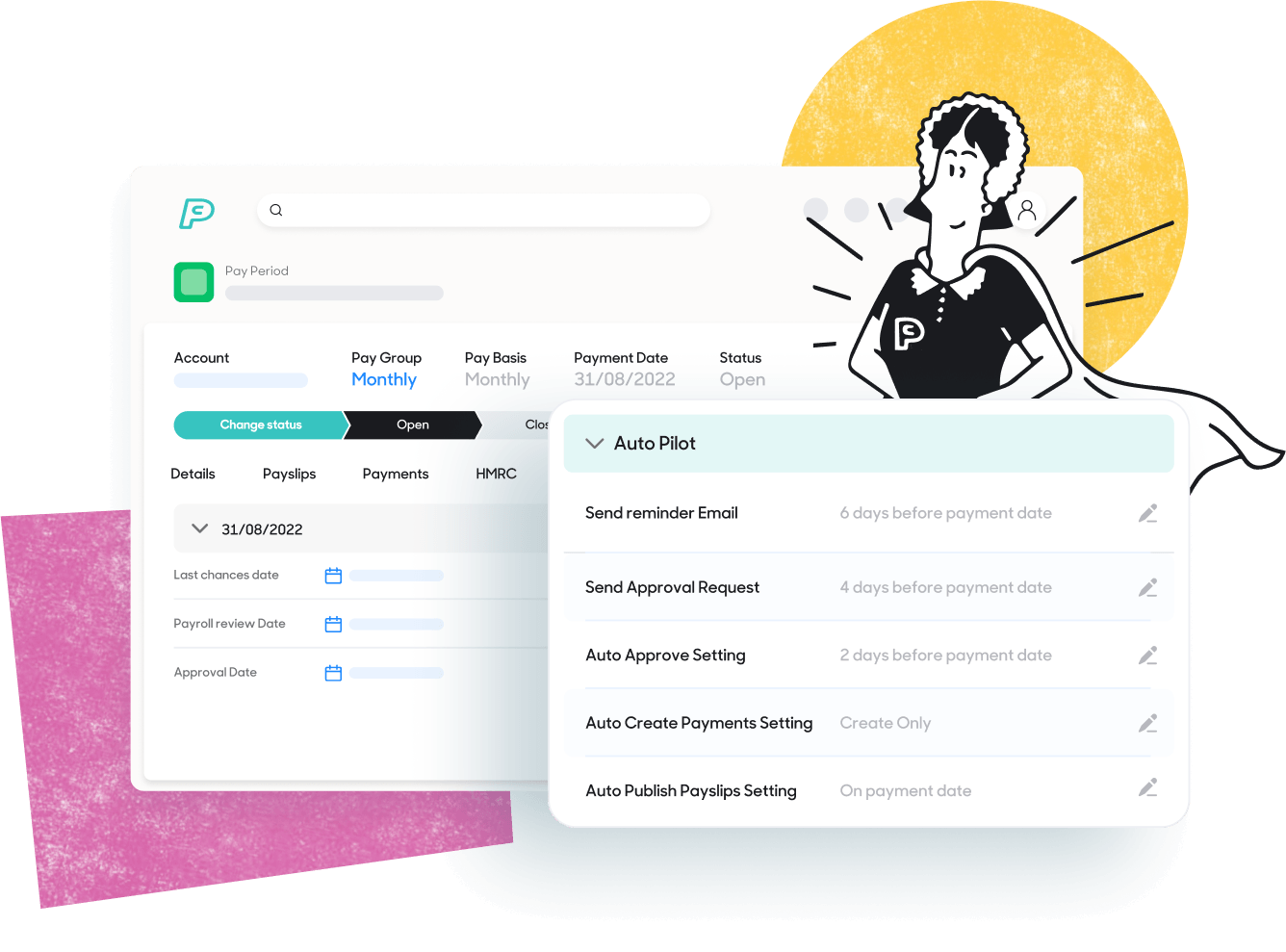
Automation reduces repeat errors. PayCaptain’s AI-powered payroll handles calculations, applies rules consistently and produces standard checks. It also supports reconciliation and detailed payroll reporting, making it easier to show compliance during external audits.
Integration also matters. When HR, time and payroll systems are aligned, there’s less re-keying. HRIS System integration reduces the risk of errors and improves data consistency. It also supports a single source of truth for employee data.
PayCaptain uses automated anomaly checks and detailed exception reporting. These checks flag unusual changes in pay, deductions or hours before approval. It’s not a guarantee of compliance, but it reduces avoidable errors by flagging for human checking. It works best when paired with clear ownership and clear review steps.
Governance for third parties and integrations
Many payroll issues start upstream. Time approvals may be late. Benefits feeds may fail. HR changes may arrive after cut-off. Governance must cover those dependencies.
A practical approach includes:
• Named owners for each data feed and system
• Data quality checks before payroll cut-off
• Monitoring for failed files, missing approvals and late submissions
• Change control for mappings, fields and interface updates
• Clear escalation routes when feeds fail
Enterprise payroll governance reduces surprise. It also prevents payroll teams from finding problems at the last minute. It’s a simple way to protect pay day outcomes.
Security and resilience beyond access control
Access control is essential, but it’s not enough on its own. Large employers also need robust resilience planning. Payroll is time-critical and failure has real impact. Business continuity needs to be part of governance.
Key resilience controls include:
• Joiner, mover, leaver access processes and evidence
• Regular role reviews for sensitive permissions
• Backup and recovery testing for payroll systems
• A fallback plan for payment file release
• Clear incident contacts across payroll, IT and the bank process
• Retention rules for payroll evidence and communications
Resilience is often invisible when it works and keeps payroll stable when something in the process fails.
How to create a strong payroll governance approach
A strong payroll governance approach starts with structure and ownership. Payroll touches HR, Finance and IT, so roles must be defined. Policies should be documented and used, not filed away. Payroll controls should be applied each cycle, not just during audits.
Steps that help large organisations:
• Assign ownership across HR, managers, payroll, Finance and IT
• Map the payroll lifecycle and place controls at each stage
• Use HMRC-recognised payroll software to support PAYE and RTI reporting
• Integrate HR, time and Finance with API feeds to reduce re-keying
• Strengthen approvals, audit evidence and segregation of duties
• Track governance metrics and act on trends
• Run regular reviews, including internal control testing
• Improve after each cycle, based on issues and root causes
Governance shouldn’t be treated as static. Organisations change and payroll must keep up. Reviews should be routine, not reactive. It’s how payroll governance stays real and effective.
Future-proof my enterprise payroll
Final thoughts from PayCaptain
Payroll governance breaks down when control is unclear and complexity rises. Large employers need clear ownership, controls and evidence. They also need visibility, so warning signs appear early, not after pay day.
Strong governance also supports employee trust. People can handle a mistake, but they struggle with slow response and unclear answers. A clear incident process, clean audit trails and good communication reduce escalation. They also reduce stress for both employees and payroll teams.
Make enterprise payroll governance stronger with PayCaptain