

In smaller businesses, spreadsheets and manual checks can feel manageable because payroll is visible. Fewer people mean fewer moving parts and errors are usually easier to spot, so fixes can be quicker. But it doesn't make the payroll process robust - it only limits the impact when something goes wrong.
Spreadsheets have weak controls, poor audit trails and little protection against errors. Manual checks rely on memory and availability. Compliance depends on people noticing problems in time.
As organisations grow, it's often harder to get the payroll basics right. Weaknesses are exposed as headcount rises and pay structures multiply. With larger employers, data moves across more systems. A manual approach amplifies risk. Errors scale. Evidence thins. And control becomes harder to prove.
At scale, payroll compliance depends on three things holding up at the same time. Accurate data, consistent controls and reliable evidence. Manual processes struggle with all three as volume increases.
Manual payroll at scale increases payroll compliance risks
Manual payroll rarely fails overnight, it weakens gradually as scale increases. Payroll still runs, people still get paid, but the control environment degrades. By the time problems surface, the cost is already locked in.
In a finance context, manual payroll usually means heavy reliance on spreadsheets, rekeying and offline checks. It also means judgement calls made outside systems. At scale, this approach creates compliance risk, even when teams work carefully.
Data integrity breaks down
Large business payroll rarely has a single source of payroll data. Starters, leavers, pay changes and absences often sit in different systems. Manual payroll depends on pulling the information together piece by piece.
Each re-keyed figure increases risk and every spreadsheet version creates uncertainty. Small mismatches can lead to incorrect pay, wrong deductions or inaccurate reporting. Once the figures flow into HMRC and RTI or pension submissions, the issue becomes a compliance failure, not just a payroll error.
At scale, this creates an evidence problem. Finance teams struggle to show which figure was correct at a given point in time. Version history is unclear and decisions are hard to reconstruct. The lack of clarity matters during audits and HMRC reviews.
Manual controls stop scaling
Manual payroll controls often live in people’s heads. Someone knows which checks to run, which totals to reconcile and which outliers to question. In smaller payrolls, that can work because most issues are visible.
As headcount grows, the control load rises fast. More pay elements and more exceptions mean more manual checking. Extra signoffs get added to reduce risk, but they also slow the cycle. Pressure builds close to payday and rushed work is where controls slip.
The compliance problem is consistency. Manual controls are hard to apply the same way every month. Evidence is scattered across emails, spreadsheets and chat messages. When an auditor asks why a decision was made, the answer can depend on who remembers, rather than what was recorded and trackable.
Visibility drops as volume rises
Manual payroll tends to surface problems late. Finance may see final totals, but not the patterns underneath. Exceptions are often found after payment, or when employees raise queries.
At scale, late discovery has larger consequences. One wrong input can affect many people. Corrections then trigger amended RTI, additional pay runs or pension fixes. Each increases compliance exposure and adds work across payroll, finance and HR.
There’s also a governance gap. If leaders can’t see error rates, adjustments and rework time, they can’t judge whether payroll controls are holding. Manual processes hide warning signs until something breaks.
Talk to our payroll experts about reducing payroll compliance risk
Common payroll errors in large organisations caused by manual processes
- Fragmented inputs from many owners - HR, managers and finance send changes in different formats and at different times. Data clashes follow.
- Cut-off failures and late change collisions - Approvals arrive close to payday. Teams rush changes and controls weaken under time pressure.
- Batch changes applied inconsistently across sites - One policy or rate change lands differently across regions, contracts or payroll groups. Errors then scale fast.
- Variable pay errors at volume - Overtime, commission and allowances arrive in bulk. One wrong rule can affect hundreds or thousands.
- National Minimum Wage compliance gaps - Risk often hides in edge cases, salary sacrifice, unpaid time and deductions. Large workforces amplify exposure.
- Pension and auto-enrolment exceptions missed - Assessment dates, postponement, refunds and contribution changes are easy to miss when volumes are high.
- Statutory pay miscalculations - Reference periods, qualifying rules and pay date shifts are hard to apply consistently when cases vary.
- RTI and reporting errors after late adjustments - Last-minute fixes create mismatches between payroll totals, RTI submissions and finance reporting.
- Weak audit evidence at scale - Approvals and decisions sit in emails and spreadsheets. It becomes hard to prove who authorised what and when.
What compliance and audit risks do finance teams face with manual payroll?
In payroll, manual errors rarely stay internal. Wrong pay can mean incorrect tax and National Insurance deductions, wrong pension contributions and inaccurate RTI submissions.
RTI is time sensitive. Late or incorrect figures can trigger HMRC queries, penalties and extra administration. The larger the organisation, the more likely it is that late changes and rework cycles create mismatches between payroll, RTI and finance reporting.
Audit risk is another pressure point. Manual payroll leaves evidence scattered across emails, spreadsheets and informal signoffs. This scattering of evidence makes it hard to prove what changed, when it changed and who approved it.
For finance leaders, this is a governance issue. Payroll turns into a hero-led process where knowledge sits with a few individuals and controls depend on memory. Under audit, the weak control environment is difficult to defend, even when teams are working hard.
There is also a reputational dimension. In some compliance areas, including National Minimum Wage, government departments publish lists of employers found to be in breach following HMRC enforcement. For large organisations, the public exposure and reputational damage can matter as much as the financial penalty.
Manual payroll increases the risk of these failures by making underpayments harder to spot early and harder to evidence later.
Contact PayCaptain to review your current payroll risk position
How automation reduces payroll compliance risk at scale
Automation helps when it tightens control. For large organisations, the goal is fewer handoffs, fewer hidden changes and clearer evidence of what happened.
Standard workflows reduce handoff errors. When payroll changes arrive by email, spreadsheets and chat, teams spend time chasing, rekeying and reconciling. It’s where mistakes creep in. Structured workflows route changes through one path, with clear cut-offs, role-based approval flows and a record of who signed off what and when.
Automation also reduces regulation drift. UK payroll rules change, and large employers often run complex pay policies on top. Manual processes can lag behind updates, especially when ERP change cycles are slow. System-managed updates reduce the risk of missed changes and inconsistent application.
Exception flagging supports human review. Strong systems can’t remove judgement from payroll, but they can surface risk early. Flagging unusual patterns, sharp pay swings, missing hours, backdated changes or unexpected deductions gives teams time to intervene before payment and before RTI is submitted.
Signs manual payroll is no longer sustainable
Manual payroll usually becomes unsustainable before it fully breaks. Finance teams start to see warning signs in both workload and outcomes:
- Rework hours increase
- Adjustments become routine
- Approvals arrive later each cycle
- RTI queries and employee pay questions rise
None of these alone forces a decision. Together, they show that controls are being propped up by effort, not process. At scale, it’s a risk position, not just an efficiency issue.
Change is often triggered by an event rather than a plan:
- An audit raises questions that are hard to answer
- HMRC penalties follow repeated corrections
- Underpayments surface and require back pay across large groups
- Key payroll staff leave, taking critical knowledge with them
A practical response needs realism. Automation is not a cure if underlying data is messy or controls are unclear. Large organisations need a phased approach that fixes inputs, defines ownership and strengthens evidence before scale increases further.
Book a PayCaptain demo for large payroll teams
How PayCaptain strengthens payroll compliance controls at scale
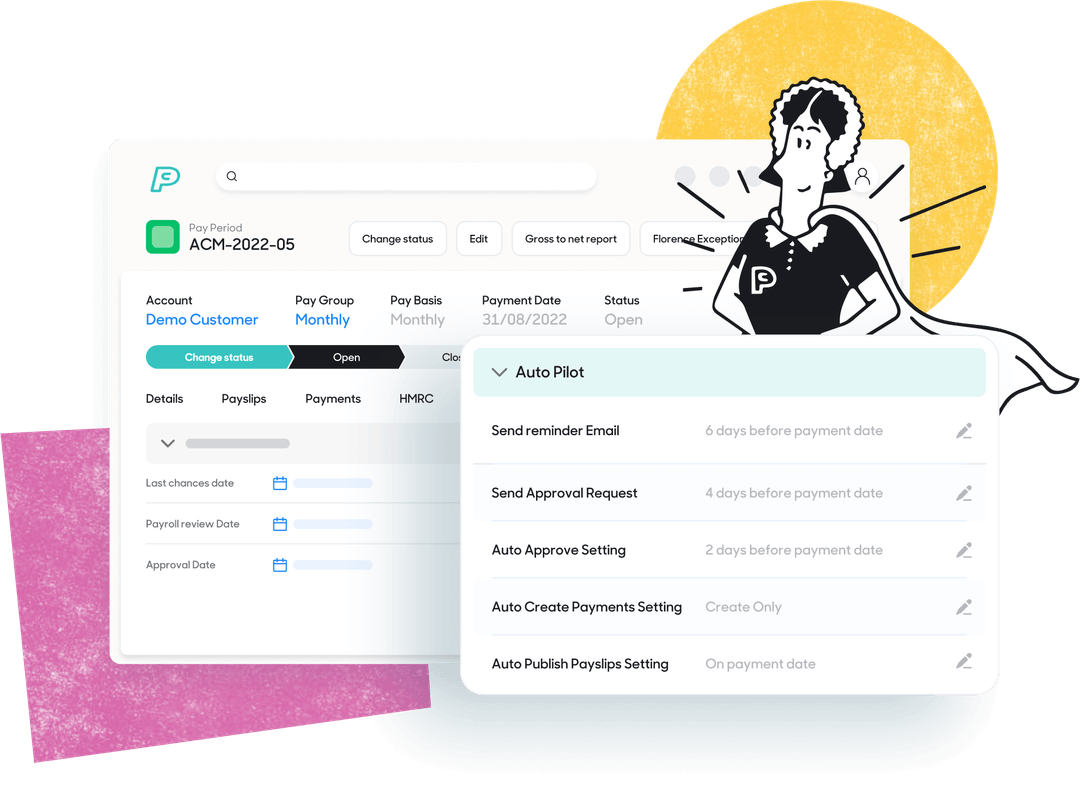
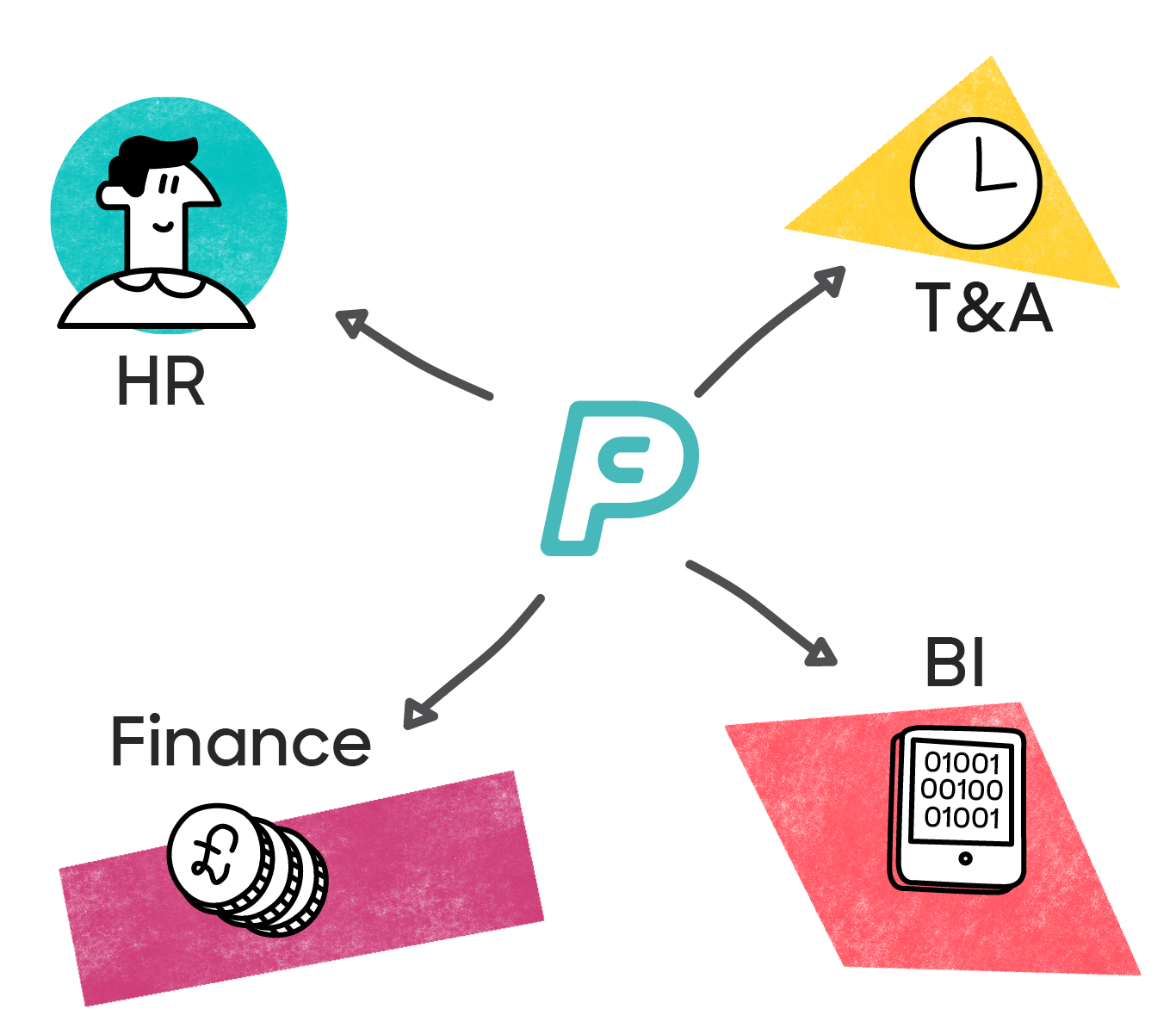
PayCaptain is built around control and calculation. It automates steps that commonly create compliance gaps in manual payroll. Data feeds can pull directly from HRIS and time systems, reducing rekeying and version drift. APIs allow large organisations to integrate quickly and adapt as structures change, without relying on brittle file uploads.
This changes how payroll scales. As headcount grows, payroll teams don’t need to grow at the same rate just to manage checks, rework and reconciliation. Automation removes routine handling and reduces dependency on a few key individuals - a common governance weakness in enterprise payroll.
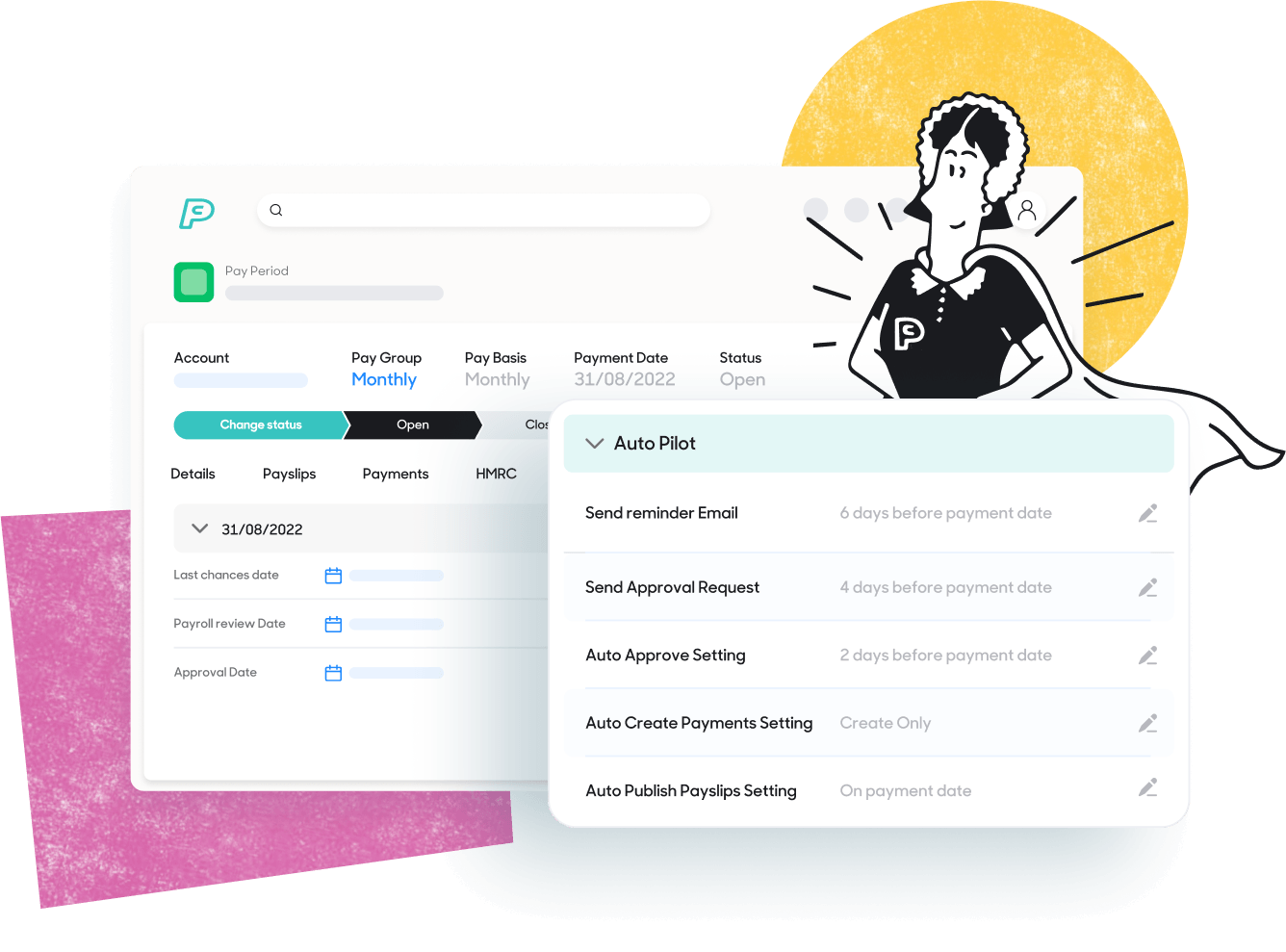
Automation is paired with intelligent checking. Automated validation and AI-supported checks surface anomalies before payment and before RTI is filed. PayCaptain is HMRC-recognised payroll software, so RTI submissions and statutory calculations follow current UK rules without teams having to track updates manually.
The audit and governance value is where finance teams tend to feel the difference most. Every change, approval and correction is logged with a clear history. Reporting can be shaped around how the organisation runs payroll, by site, cost centre, pay group or business unit. The payroll software supports reconciliation, oversight and more defensible answers during audits and compliance reviews.
Explore how PayCaptain reduces payroll risk in large organisations
Final thoughts from PayCaptain
Manual payroll doesn’t usually fail because teams are careless, but because scale changes the risk profile. More employees mean more data, rules and pressure at the edges of the process. Over time, effort replaces control. Errors get fixed, but evidence weakens.
For finance teams, the real question is whether payroll can be defended. That means knowing the numbers are right and that the rules were applied consistently. It also means knowing the decisions can be evidenced. At scale, manual processes make that harder with every pay run.
PayCaptain exists to restore control without adding friction. Automation, intelligent checks and clear audit trails help payroll scale without relying on heroics. The result is fewer surprises and stronger payroll compliance, supported by a payroll process finance teams can stand behind with confidence.