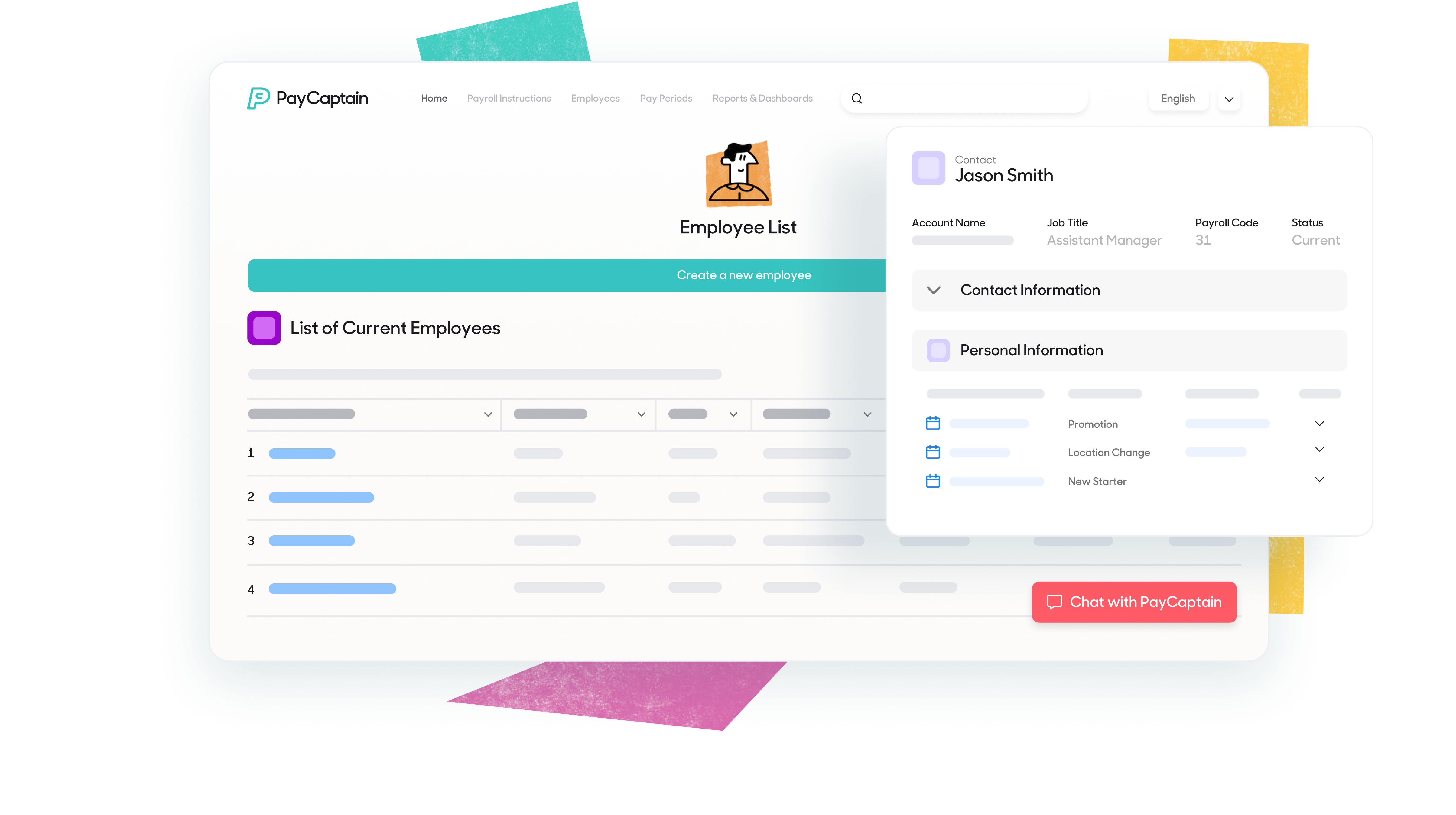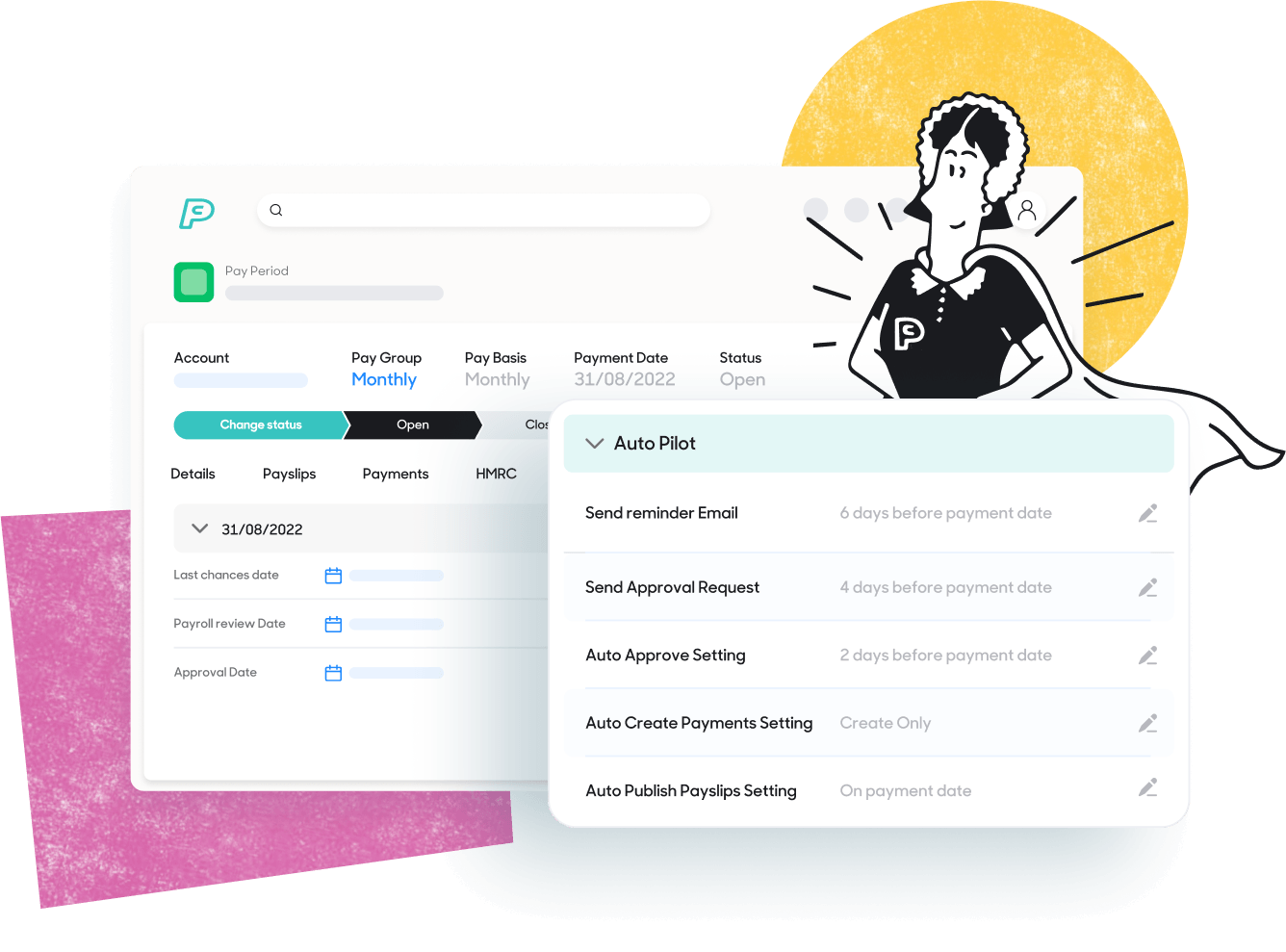


In enterprise organisations, payroll sits between HR and finance in a much wider stack.
A large business or enterprise may have one system for HR, another for payroll, then others for benefits, rotas, attendance and finance. When data moves badly between them, problems spread fast. Pay can be wrong and reporting can slip. Teams can lose trust in the numbers.
A good integration, however, is a reliable and secure connection between systems. It’s controlled data flow that moves the right information to the right place.
So, what makes a good payroll integration?
At a basic level, it should cut manual work and improve trust in the data. It should also give teams a clear record of each movement and any failure.
Why payroll integrations matter in enterprise environments
Enterprise payroll is rarely just about running pay. It’s about handling change across a large and often complex organisation.
- New starters join
- Salaries change
- Overtime is approved
- Employees move cost centres
- Benefits start or stop
If this information doesn’t move cleanly between systems, payroll becomes harder to run and trust.
A good integration removes the need for the same data to be entered more than once. HR updates can pass into payroll without rekeying. Payroll outputs can move into finance in a structured way. That cuts repeat work and lowers the chance of mismatch between systems.
This matters even more in enterprise environments because the scale is higher. More employees mean more transactions. More entities or locations mean more variation in structure, timing and approvals.
There’s also a compliance angle. Payroll touches PAYE, National Insurance, pensions and RTI reporting. In the UK, employers still hold responsibility for accurate PAYE reporting, even when systems are integrated. Integration doesn’t remove the responsibility, and raises the need for control.
Finance has a stake in this too. Payroll is often one of the largest operating costs in the business. Finance needs consistent outputs for journals, cost centre reporting and period-end review. If payroll data doesn’t reconcile cleanly with the ledger, month-end becomes slower and less reliable.
There’s an employee impact as well. If data moves badly, pay issues follow. Incorrect pay or late pay can damage confidence very quickly. Good payroll integrations lower the chance of avoidable mistakes by keeping approved data moving through the process in a controlled way.
In enterprise stacks, the goal is to govern payroll complexity. A strong integration creates structure between teams and systems.
- HR owns people data
- Payroll owns calculation
- Finance owns reporting
When the roles are clear, data moves with purpose and control gets stronger. Good payroll integrations don’t make complexity vanish, but they make it easier to manage.
See PayCaptain’s integrations in action
What are the types of payroll integrations?
When people talk about payroll integrations, they often speak as though there’s just one integration – very often with HRIS systems. In practice, payroll usually connects to several systems, and each connection has a different job.
HRIS
HR should be the starting point for core employee records. That includes:
- Legal name
- Address
- Date of birth
- National Insurance number
- Contract type
- Working pattern
- Start date
- Leaving date
- Salary or hourly rate
- Department
- Location
- Cost centre
It should also include change events such as promotions, salary changes, unpaid leave and statutory status signals. Payroll then consumes that data and uses it to calculate pay.
The quality of payroll depends on the quality of the input. If HR data is incomplete, late or inconsistent, the problem doesn’t stay in HR. It flows into payroll.
Finance
The second is the finance integration. This is the downstream handoff that lets payroll data move into reporting and control.
Finance should receive structured outputs that can post cleanly into the ledger. Data can include:
- Gross pay totals by entity and cost centre
- Employer costs
- Statutory payments and recoveries
- Payroll liabilities
- Net pay totals
- Payroll journals mapped to general ledger codes
Good payroll integrations make that handoff consistent each period, so reconciliation becomes a control step instead of a monthly investigation.
Benefits
The third is the benefits integration. Payroll carries deductions and employer costs linked to pensions and other benefits. If those changes were to sit outside the payroll flow, it becomes harder to keep deductions and enrolment status accurate at scale. In a UK context, that also matters for auto-enrolment and the wider accuracy of payroll deductions.
Time and attendance
Time and attendance/rota integrations feeds hours, overtime and shift changes into payroll. In some sectors, tronc data may also need to flow through in a controlled way. These flows matter more in multi-site or variable-hours environments because the volume of change is higher and the margin for manual error is lower.
How data flows between systems
At PayCaptain, the integration principle is clear. Data should move in a structured and auditable way between HR, payroll and finance.
PayCaptain receives data via the PayCaptain API and also polls data from HRIS and rota systems’ APIs. It then transmits data to integrated systems using APIs in real time or on a schedule, depending on the system and the use case.
This is what good payroll integrations look like in practice. Integration isn’t just about passing data. It’s about passing accurate, approved data with clear ownership and a defined job to do.
What makes a payroll integration reliable and scalable?
A good payroll integration must work repeatedly, under pressure and through change.
Reliability starts with clear ownership. Each system should have a defined role and only write the data it owns. If the same field can be changed in multiple places, control weakens. The result is often a partial truth in each system, with no one quite sure which value should win.
A reliable payroll integration also needs consistent data definitions. Internal teams should agree what each field means and where it comes from. How it’s used must be agreed upon. This structure lowers the risk of drift when processes change or the stack grows.
- Timing matters. Enterprise payroll runs on cut-offs and approval points. HR changes may happen every day. A good payroll integration handles the difference with clear rules. It needs defined timings, effective dates, validation rules and a clear route for corrections.
- Validation is another core part of reliability. A strong integration shouldn’t quietly accept bad data. It should check key fields, flag failures and make it clear who owns the fix. Good payroll integrations also need retries and clear error messages, so teams know when something has failed and what needs attention.
- Monitoring matters for the same reason. In enterprise stacks, silent failure is a real risk. If a transfer fails, arrives late or carries unexpected volumes, payroll and IT need to know. Audit logs, alerts and interface monitoring help teams spot issues early rather than after payroll has been processed.
- Scalability depends on many of the same qualities. If the integration relies on manual uploads, hand-built checks or memory, it becomes more fragile as the business grows. A scalable integration uses automation to handle higher data volumes without adding the same level of manual effort. It should also support multi-entity structures, multiple cost centres and more complex pay items without pushing work back into spreadsheets.
- Security can’t be left out of this. Payroll data is sensitive. Good payroll integrations should support role-based access and strong protection for data moving between systems. These protections help organisations meet legislation expectations while limiting who can see or change what.
Enterprise payroll software should do more than simply connect systems. It should support a controlled process that payroll, IT and finance can all rely on. In practice, that means dependable movement of trusted data. This is backed by clear controls and a design that still works when the organisation gets bigger.
Common integration pitfalls to avoid
Most integration problems don’t start with one dramatic failure. They usually grow from weak design or unclear ownership. Poor processes are also a potential risk of failure.
- One common pitfall is unclear system ownership. If HR, payroll and finance can all change overlapping data, each system becomes a partial master. This can create confusion and weakens accountability.
- Another is poor data consistency. If fields are named differently, formatted differently or interpreted differently across systems, errors follow. This can affect salary values, tax handling, cost centres and more.
- Identity management is another weak spot. Systems may use different employee IDs, or reuse IDs after a rehire. Without a stable matching key and agreed rules over time, there’s a real risk of attaching payroll data to the wrong record.
- Timing problems are common as well. HR changes happen as events. Payroll runs to deadlines. If the rules around cut-offs, latency and duplicate events are unclear, the integration becomes harder to trust.
- The same applies to effective dating. A change entered today may apply to a past period, which can affect arrears, payroll results and finance postings. The rules need to be agreed in advance between the stakeholders.
- A technically sound integration can still fail if teams don’t know how it should work. Incomplete training, weak testing or informal workarounds can pull the process back into manual fixes.
- Security gaps also matter. Weak access controls or poor protection around sensitive payroll data increase risk for both the organisation and its employees.
A common warning sign is the rise of workarounds. If teams still depend on manual uploads or spreadsheet bridges, the integration may look connected, but not be working properly. This kind of setup often holds until a process changes.
A good enterprise payroll integration should reduce these weaknesses, not hide them. If it still relies on manual correction at every cycle, it’s not doing enough.
Explore a better way to connect payroll into your stack
How to evaluate payroll integrations effectively
Evaluating payroll integrations properly means looking beyond the demo. A system may appear connected, but the real question is whether the connection will hold up in live payroll, month after month.
Start with the payroll basics and assess the data flow itself. Ask what data moves from HR into payroll and what outputs move from payroll into finance. Then ask who owns each field, how often it moves and what happens when something fails.
You should also test whether the integration supports the structure of your business. That includes entities, departments, cost centres, backdated changes, retro pay and approval points. Enterprise stacks rarely stay still, so the integration has to cope with change rather than break under it.
A sensible evaluation should cover these points:
- Is there a clear system of record for every key field?
- Can approved HR data move into payroll without rekeying?
- Can payroll outputs move into finance in a structured format?
- Are validations built in?
- Are failures visible, with named ownership for fixing them?
- Are audit logs available?
- Can the integration support cut-offs, effective dating and backdated changes?
- Can it support cost centres, entities and reporting needs?
- Are access controls strong enough for payroll data?
- Will it still work well as headcount and complexity grow?
Testing matters as much as features. Parallel runs and testing help teams see how the integration behaves before it goes live. Anomalies deserve special attention. Rehires, mass changes, bonus runs and retrospective updates often show where the weak points really are.
Finance should be involved in this assessment, not just payroll and IT. If payroll outputs don’t reconcile cleanly into finance, the integration is incomplete no matter how polished the upstream flow looks.
The focus should be on controlled data flow, not loose connection. A strong setup needs a clear system of record for each field, formal handoffs, built-in reconciliation and regular review of alerts, mappings and access. Payroll and IT teams then get a practical way to judge whether payroll integrations are strong enough for enterprise payroll use.
Final thoughts from PayCaptain
Good payroll integrations are about creating a controlled route for trusted data through the enterprise stack. This is driven by clear ownership and defined handoffs. It also means controls that stand up under scale and change.
At PayCaptain, that shows up in a practical way. Data can move through the PayCaptain API and through polling from HRIS and rota system APIs. It can then be passed to integrated systems in real time or on a schedule, depending on the setup.
The real test of payroll integrations is simple. Do they reduce manual effort, improve trust in the data and help teams prove control? If they do, payroll becomes easier to run and easier to rely on.
In the end, good payroll integrations should feel quiet. Teams shouldn’t need to chase data or need manual interventions. They shouldn't have to debate which number is correct.
- HR changes should be captured once, then flow cleanly
- Payroll journals should reconcile
- Finance should trust the output
- The audit trail should be complete enough to prove control and governance when questions arise
It’s what ‘good’ payroll integrations look like in an enterprise stack.
Talk to our team about enterprise payroll integrations
.png)