

Enterprise payroll usually means large employee numbers, multiple payroll groups, multi-site locations and a high volume of exceptions. Whilst the tax, National Insurance and statutory rules may be national, payroll itself can still be complex. More employees, more data and more pay variations change the nature of implementation.
Why enterprise payroll implementation is fundamentally different
Volume changes the payroll implementation risk profile
A small error doesn’t stay small for long when it affects enterprise payroll. One wrong mapping, a missing field or bad rule can flow through hundreds or thousands of records in a single pay run.
Enterprise payroll data is rarely neat. It often includes multiple pay elements, deductions, pension arrangements, salary changes, back pay, absence data and different contractual terms. The implementation team has to move data into a new system, but also existing payroll logic at scale.
Read about timelines, risks and what can go wrong implementing enterprise payroll
Data accuracy matters before anything else
Data accuracy is the foundation of the whole enterprise payroll integration project. If the source data is weak, every stage is harder to trust.
Problems include:
- missing or duplicated records as well as structure
- fields may be used differently across teams
- historic values may sit in the wrong place
- some rules may exist in manual workarounds rather than in the old system itself
These elements create significant payroll implementation risks during migration. The new platform may receive data that looks complete but doesn’t reflect how payroll is actually run within the organisation.
Configuration must match real payroll practice
System configuration is another area where enterprise payroll projects become harder than in smaller organisations. A payroll system can be configured correctly in a technical sense, but still fail in practice if it doesn’t match how pay is calculated.
That means the team must test more than nominal settings. They need to check calculation rules, pay elements, cut-off dates, approval paths and downstream outputs. Enterprise payrolls tend to carry more exceptions, so validation mustn’t stop at standard cases.
The old system may not be a clean benchmark
This is an awkward but necessary point. A new system is often checked against the old one, but the old one may not 100% accurate. If legacy calculations contain workarounds or hidden errors, matching them exactly isn’t proof of success.
It’s why implementation needs multiple checks. First, whether the new system matches the prior output. Second, whether the prior output was correct in the first place. Without both, payroll will reproduce old mistakes in the new platform.
Parallel running happens under real time pressure
Parallel running is where these issues meet. Results from the new system are compared against the live payroll before go-live. It’s a critical exercise and, at enterprise level, the comparison brings with it a lot of work. There are more employees to test and more exceptions to explain. Quite often, there’s less time to carry out the activity than most internal teams would like.
Payroll deadlines don’t move because an implementation is difficult. It’s a challenge building a new system. It’s also challenging to prove payroll data and the configuration is right, in a fixed payroll timetable. During parallel runs, the differences found must be properly understood. It’s what makes enterprise payroll implementation a risk and significant change management exercise, not just a software project.
Typical timelines for enterprise payroll implementation
Enterprise payroll change projects often run for 9 to 12 months. Whilst this range is realistic due to the complexity of enterprise payroll, it’s not fixed. At enterprise level, the timetable is shaped by the work needed to prove the payroll is right.
The longest stages are usually data preparation, configuration checks and parallel running. Teams primarily need to know the source data is accurate. It should also be verified that the new setup matches real pay rules and any differences found in parallel runs are understood.
Client resource matters as well. Internal teams need to supply data, explain exceptions, review test results and approve decisions. If the capacity of internal resources to do this is limited, the timetable will get pushed out.
The wider material points in the same direction. Larger payroll populations, fragmented data, multiple pay groups, integrations and extra testing all add time and enterprise payroll implementation risks. It’s why enterprise payroll implementation plans should leave lots of room for validation.
Where payroll implementations commonly fail at scale
Enterprise payroll change projects don’t fail because the software can’t run payroll. One of the reasons they fail is because an organisation treats it as a payroll team project, when it’s really a cross-business change programme.
At scale, the biggest weakness is often internal planning. Teams focus on the build, then discover too late that payroll sits in the middle of finance, HR, operations and reporting. When one of the groups is brought in late, problems surface near go-live, when there’s less time to fix them.
Common failure points include:
- Weak internal ownership. No one is clearly responsible for decisions, dependencies and sign-off
- Late finance involvement. Payroll may be tested, but journals, coding and downstream finance outputs are often left too late
- Poor change communication. Teams affected by new processes don’t know what’s changing, when or why
- Narrow testing. Standard payroll cases are checked, but exceptions and less common scenarios are missed
- Slow decisions. Open questions on rules, approvals or data handling sit unresolved and delay the plan
- Underestimating operational impact. Teams assume the new system only changes payroll, when it also changes controls, reporting and handoffs
In situations where enterprise payroll implementations fail, the pattern is usually the same. The technical work moves forward, but the business isn’t aligned around it. This lack of synergy creates late rework, weak testing and avoidable pressure in parallel testing.
At enterprise level, payroll implementation needs tight planning across departments from the start. Otherwise, the system may be ready, but the organisation won’t be.
Understand what needs to be checked, proved and challenged before implementing enterprise payroll
The risks of poor implementation planning for enterprise payroll
Poor implementation planning rarely shows up as one obvious mistake. It can appear as a series of gaps that only become clear when payroll is live. By then, the cost is higher because the issue affects compliance, pay accuracy and employee trust at the same time.
Common risks include:
- Weak source data from the previous provider or system. Data may arrive in the wrong format, with unclear field use, missing history or manual workarounds hidden outside the system. If that data is mapped without challenge, errors move into the new payroll
- Poor validation of core employee details. Bank account details, tax codes and other key records need checking before go-live. If they aren't, people can be paid into the wrong account or taxed incorrectly
- Limited testing of downstream outputs. Payroll can appear correct on screen, while finance journals, reports or cost allocations are still wrong. That creates problems for month-end and audit
- Late or unclear communication with employees. Staff need to know what’s changing, what isn't and what they should check. Without this communication, issues may be found late and employee trust then drops very quickly
Fragmented data, weak integrations and narrow testing all increase risk at scale. Poor planning delays implementation but carries further risk - carrying old errors into a new system; creating compliance exposure and making the first live pay runs harder to recover from.
The role of integrations, data migration and parallel runs
Integrations, data migration and parallel runs are usually treated as separate workstreams. In practice, they rise or fall together. If one part is late or inaccurate, the rest of the plan will wobble.
Where payroll connects to a third-party system, the real work is in accuracy. It’s not enough for data to just move from one platform to another. The fields need to map correctly and the timing needs to hold. The outputs need to match how payroll is processed within the organisation. A feed can be technically live but still be wrong in ways that only show up during testing – or when live if not testing properly.
Data migration has the same problem. Teams need to know what’s being moved, how it’s structured and whether the values can be trusted. If key payroll inputs arrive late or in the wrong format, testing slows down and confidence drops.
Parallel running is the critical proving ground. For payroll to be implemented and paralleled successfully, the HRIS and time and attendance systems need to be running first. If they’re not, payroll is being tested against incomplete upstream data.
Parallel running for enterprise payroll is essential for checking payroll calculations. But it’s also essential to prove system connectivity and that the transferred data and payroll outputs all work on the same timetable.
How governance and change management reduce payroll implementation risks
Good governance starts a long time before any build work begins. Workshops on how payroll runs need to happen and shouldn’t be rushed. A new provider needs to understand the existing payroll process – warts and all - before taking it over. This includes exceptions, manual checks, approval points, finance journals, cut-off dates and upstream dependencies.
Enterprise payroll often looks simpler on paper than it is in practice. Teams may describe the standard process, while the live payroll depends on local fixes, legacy rules or manual steps that only happen if something goes wrong. If those details aren't brought to the surface early, the new setup can be technically complete but operationally weak.
Strong governance reduces payroll implementation risk by making a few things clear from the start:
- who owns decisions and sign-off
- which departments need to be involved, and when
- when HRIS, time and attendance and other feeds have to be ready
- how data, configuration and legacy outputs will be validated
- how issues found in testing and parallel will be resolved
Change management matters just as much as good governance. Finance can't be brought in late as payroll journals matter to reporting and close. Employees also need clear communication on what’s changing, what they need to check and when to raise concerns.
Done properly, governance keeps the project honest. It stops assumptions from turning into defects at go-live. It also gives the provider and organisation a shared view of how payroll really works, which is what makes accurate migration, testing and parallel runs possible.
Final thoughts from PayCaptain on implementing enterprise payroll
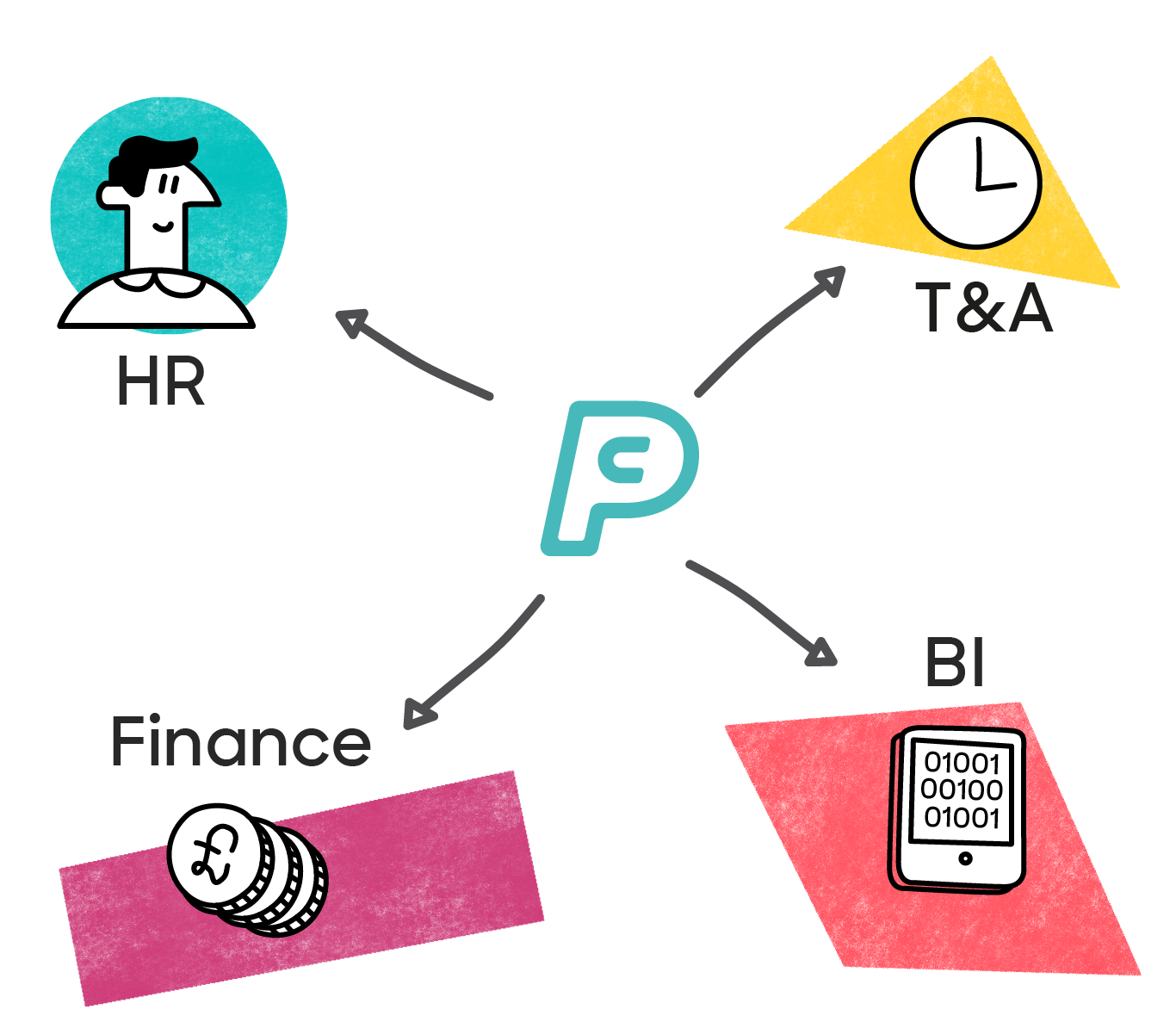
Enterprise payroll implementation isn't difficult just because it's large. It's difficult because scale exposes weak data, hidden workarounds and gaps between departments. A project can look on track on paper, then fail under pressure when payroll, HR, time data and finance outputs have to work together to a fixed deadline.
The organisations that reduce payroll implementation risks usually do one thing well. They treat implementation as a business change, not a system switch. That means giving enough time to understand how payroll really runs, testing the right things and involving finance, HR and employees early.
A smooth go-live doesn't come from speed alone. It comes from knowing which legacy outputs can be trusted, which can't and where assumptions need to be challenged. In enterprise payroll, can be the difference between a controlled transition and a long clean-up after first live pay day.
Help payroll, HR and finance teams prepare for payroll change with fewer unknowns
.png)