

What is payroll master data governance?
Payroll master data governance is the way an organisation controls the standing information used to run payroll. It covers who can create or change data and which system holds the trusted record. It also contains the process of how changes are checked.
Payroll master data feeds calculations, HMRC payroll reporting and finance systems. Weak controls in payroll master data can lead to incorrect pay, duplicate employee records and reporting errors further downstream.
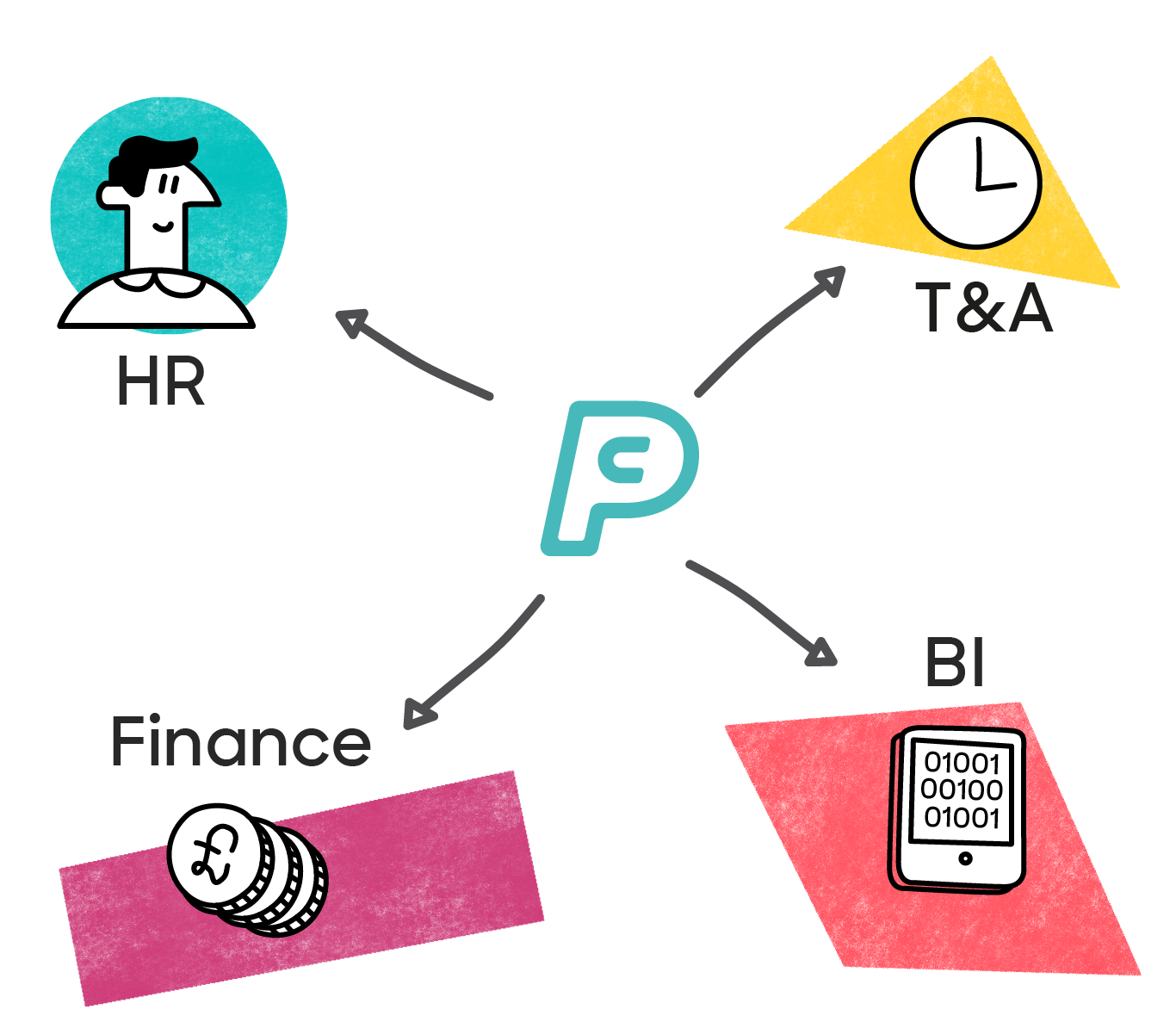
As organisations grow, payroll data ownership becomes harder to manage informally. Enterprise payroll data management needs defined responsibilities and clear rules that continue beyond system implementation.
Contents
- What payroll master data includes
- Why master data governance matters more at enterprise scale
- Who should own and maintain payroll master data
- Risks of poor payroll master data governance
- Building controls around payroll master data
- How payroll platforms support strong data governance
- Payroll master data governance FAQs
What is included in payroll master data?
Payroll master data is the core information about an employee and their employment relationship. It ususally remains relevant across several pay periods. It's different from transactional data, like overtime worked in a single month, and from payroll results such as year-to-date taxable pay.
Payroll master data can include:
- employee name, address and date of birth
- National Insurance number and payroll ID
- tax code and National Insurance category
- start date, leaving date and employment status, which underpin documents such as the P45 and P60
- salary, allowances and benefits reported on a P11D
- pension enrolment status
- bank and payment details
- organisational assignments and cost centres
- payroll and costing information
Many of these fields are also used within Real Time Information (RTI) reporting to HMRC.
For example, HMRC requires fields including name, date of birth and National Insurance number on the Full Payment Submission (‘FPS’). Payroll IDs must also be unique.
Some data begins life in an HRIS before moving into payroll, while other information is maintained directly within the payroll platform itself. Strong payroll master data governance defines which system is authoritative for each field, and records how changes should move between them.
Why payroll master data governance matters more at enterprise scale
Payroll data governance becomes more demanding as organisations grow, simply because there’s more of it to manage. Larger workforces create more employee changes in every payroll cycle, as new starters, transfers and leavers all need to be reflected correctly in standing records.
Larger organisations often run several PAYE schemes, and HMRC applies late-filing penalties to each one separately. For employers with 250 or more employees, the monthly RTI late-filing penalty is £400 per PAYE scheme, which is exactly why control over payroll information matters so much at scale.
Record keeping also becomes more complex, since different payroll-related records carry different retention periods. PAYE records generally need to be kept for three years after the end of the tax year, while most workplace pension records, overseen by The Pensions Regulator, must be kept for six years, and opt-out notices for four.
From 6th April 2026, it became mandatory for employers to keep adequate holiday and holiday-pay records for six years, with compliance overseen by the Fair Work Agency.
Enterprise payroll data management can’t rely on individual employees remembering these requirements. Organisations need agreed retention rules that cover every type of record.
Scale also increases the risk of duplicate or conflicting information, particularly when several systems hold employee data. A trusted source for each field reduces that risk, so the organisation always knows where the accepted version lives and which systems receive it.
See how PayCaptain supports payroll data governance
Who owns payroll master data?
There’s no UK law that assigns internal ownership of payroll master data to HR, payroll, finance or IT.
The employer remains legally responsible for many of the underlying records. Under UK GDPR, the employer acting as controller retains responsibility for employee personal data, and that responsibility remains even when payroll processing is outsourced.
Internal payroll data ownership should reflect the type of information being managed. HR or People teams may maintain employee identity and employment information, while payroll typically looks after tax information and pension records used in processing.
Finance has an important role wherever payroll information maps into the general ledger, and IT or data teams typically manage system access and the technical movement of information between systems.
The distinction between business ownership and technical responsibility matters. Business teams understand what a field means and how it should be used, while IT teams manage the systems that store and transfer it. IT could maintain the access controls around a salary field, for instance, but that doesn’t mean IT should decide whether the salary itself is correct.
A practical payroll data ownership model, recommended by professional bodies such as the Chartered Institute of Payroll Professionals (‘CIPP’), should answer two questions for every important field:
- Which system holds the trusted record?
- Who’s responsible for approving its creation or change?
This removes uncertainty when information differs between payroll, HRIS and finance systems.
What are the risks of poor payroll master data governance?
Weak governance can create problems far beyond the original data error. A wrong postcode, for example, can mean HMRC correspondence is sent to the wrong address, and reusing a payroll ID can create a duplicate employee record by accident.
HMRC also warns against reporting several personal-detail changes within the same FPS, since doing so can create duplicate payroll records and affect the PAYE bill.
Other risks include:
- Incorrect or late pay: Wrong standing data can affect payroll calculations. Late or incorrect payroll reporting may also affect an employee’s income-related benefits, including Universal Credit.
- Compliance gaps: Incorrect data can affect RTI submissions, pension assessment and National Minimum Wage records. An incorrect P11D filed negligently or fraudulently can attract a penalty of up to £3,000, and the same maximum applies to a general failure to keep adequate PAYE records.
- Downstream finance errors: Incorrect cost centre or account mapping can send payroll costs into the wrong general ledger accounts, creating extra reconciliation work for finance.
- Ghost records: Poor leaver processes can leave records, and system access, active long after someone has actually left.
- Bank-detail fraud: Requests to change bank details (known as salary diversion fraud) should follow agreed checks rather than bypassing normal approval.
- Access and privacy problems: Employment records should only be accessed or changed by authorised people. Manager access should also be limited to what they need.
Poor payroll master data governance can make each of these problems harder to trace, because the original change may have happened several systems earlier.
Talk to us about enterprise payroll data management
How to build controls around payroll master data
Good controls should cover the full life of payroll data, from employee creation through to leaving.
The starting point is a data dictionary, recording what each field means, where it comes from, why it’s needed and how long it should be kept, along with the trusted system and the business function responsible for it.
High-risk changes need additional checks. Bank-detail changes are a good example: UK government fraud guidance recommends sign-off and a short delay before changes take effect, along with confirming old and new account details through a known contact method rather than one supplied within the change request itself.
Other useful controls include:
- unique payroll ID rules and duplicate checks
- effective-dated changes rather than overwriting history
- access level/restricted permissions for changing sensitive fields
- audit logs showing who changed information and when
- exception reports before payroll is committed
- regular reconciliation between payroll and finance records
Employees can also play a role in maintaining accuracy. ICO guidance recommends that workers are asked periodically to check their information remains correct.
Controls must continue when employees leave. Employee leaving dates should be recorded accurately. System access should be removed as roles end, and records then retained, or securely deleted or anonymised, in line with the organisation’s retention schedule.
How payroll platforms support payroll data governance
Payroll software can support many of these controls, but it doesn’t decide how an organisation should govern its data.
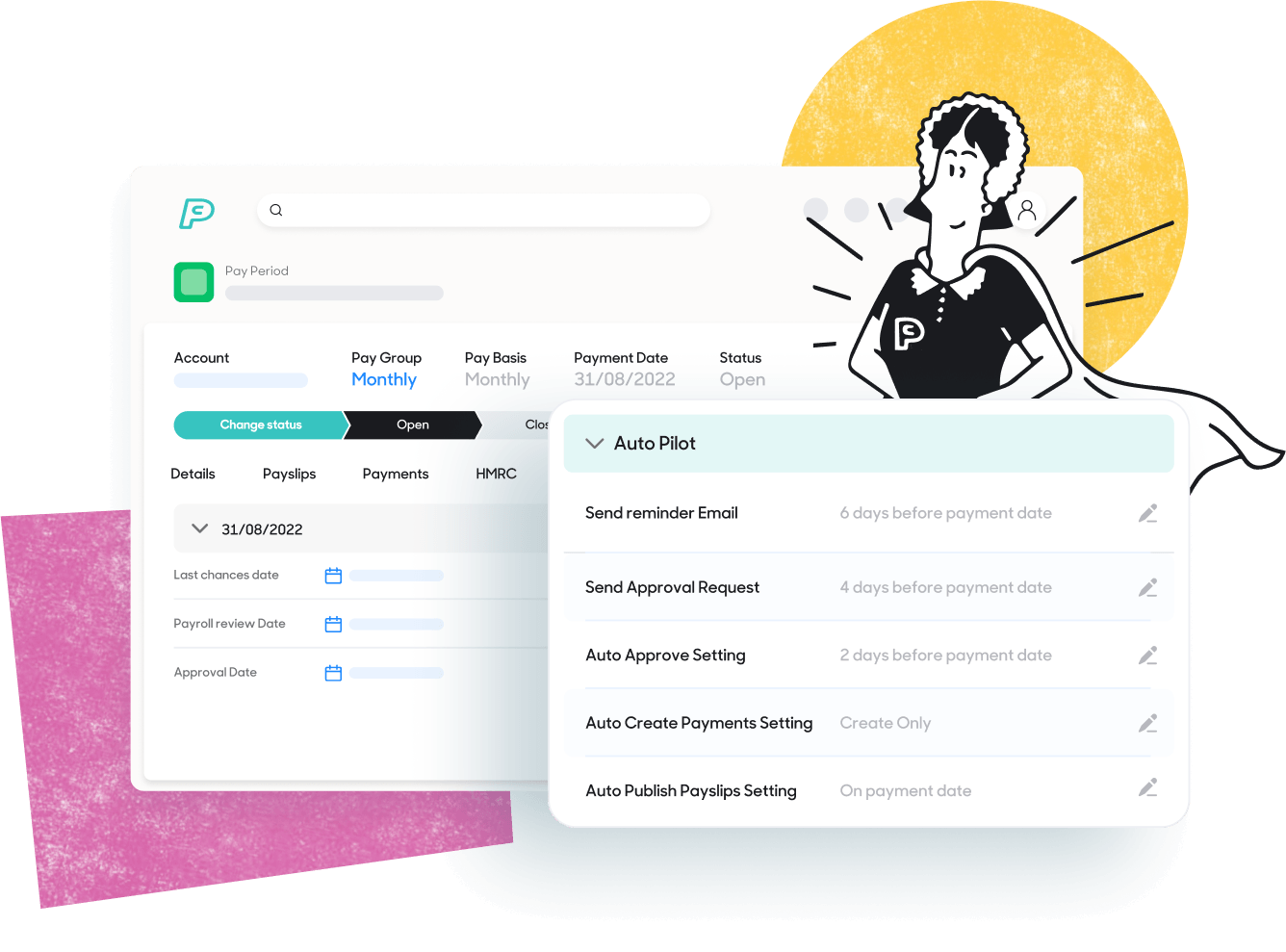
Modern platforms provide role-based access and approval workflows. Audit histories show who changed a record and what changed. Effective dating preserves previous values rather than overwriting them and validation rules stop incorrect combinations reaching payroll or finance.
These capabilities are valuable, but they still need to be configured. Some systems require organisations to actively decide which payroll objects should be audited, and audit histories may not exist until those settings are switched on.
Privileged integration accounts also need care, since some technical permissions can bypass normal approvals altogether. This is why enterprise payroll data management can’t be treated as just a software configuration exercise. Organisations need to decide the rules before asking technology to enforce them. The employer remains responsible even when a payroll provider processes information on its behalf.
Final thoughts from PayCaptain on payroll master data governance
Payroll master data sits underneath almost every part of the payroll process. When that information is accurate and controlled, payroll has a stronger foundation, and finance receives more reliable information for reporting and reconciliation.
Clear payroll data ownership is central to this. Teams should know which system holds the trusted record and who can approve changes. The technology then supports those decisions through access controls, audit histories and validation before incorrect data reaches later processes.
As organisations grow, informal ownership becomes harder to sustain. Payroll master data governance gives HR, payroll, finance and IT a shared way to manage information that affects every pay cycle.
Explore stronger payroll data controls with PayCaptain
Frequently asked questions about payroll master data governance
What is payroll master data?
Payroll master data is core information used across several payroll periods. It includes employee identity, employment details and tax information. It can also cover pension status, bank details and payroll costing information.
Who owns payroll master data?
UK law doesn’t assign payroll master data to one internal department.
The employer remains responsible for the underlying legal and personal data obligations. Internal ownership can then be split between HR, payroll, finance and IT according to the field being managed.
What happens when payroll master data governance is weak?
Weak governance can lead to incorrect pay or duplicate employee records. It can also create RTI errors and downstream finance problems. Poor access controls may create privacy or fraud risks too. Clear ownership and change controls reduce these risks.