

A payroll API allows systems to exchange information automatically. Instead of exporting files, uploading spreadsheets or re-keying data between platforms, information can move directly between systems in a structured and controlled way.
- Modern payroll doesn't operate in isolation anymore:
- Employee information often starts in an HR system
- Working hours may come from a rota or workforce management platform
- Pension data needs to be shared with providers.
- Payroll costs need to reach finance systems.
- Statutory information must be reported to HMRC.
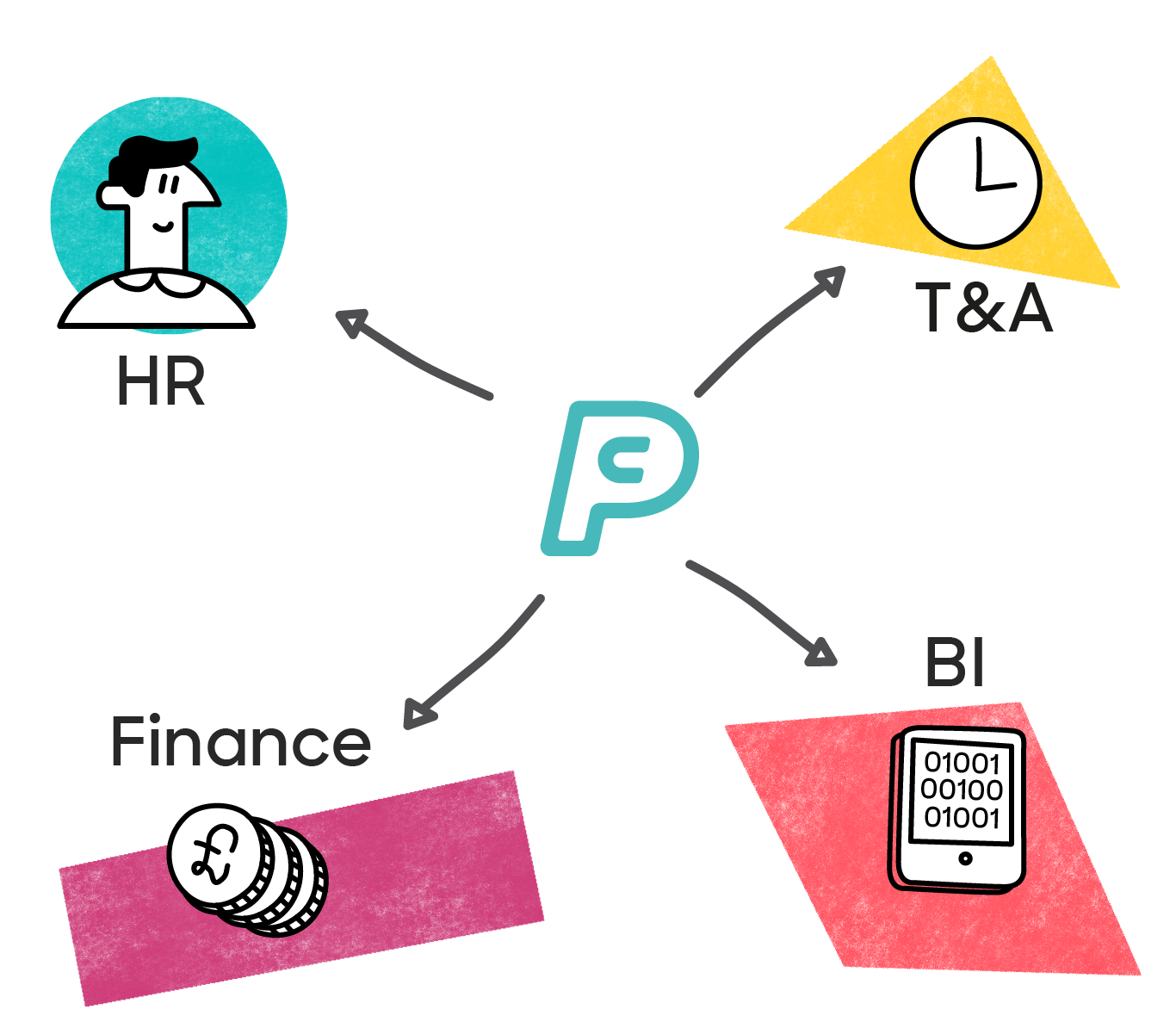
For payroll to work smoothly, all of these systems need to communicate with each other, and this is where payroll APIs come in.
For HR, payroll and finance teams, this creates a more connected process. It reduces manual work and improves data accuracy. APIs help everyone work from the same information.
Explore connected payroll with PayCaptain
What is a payroll API?
A payroll API, or Application Programming Interface, is a way for software systems to communicate and share information automatically. It can be thought of as a bridge between platforms. When information changes in one system, the API allows that change to be passed to another system without somebody having to move the data manually.
For example, a salary increase approved in an HR system can be sent directly to payroll. Once payroll has been processed, payroll costs can then be sent to the finance system. The API handles the communication between the platforms.
Without a payroll API, these transfers often rely on spreadsheets and manual uploads. With a payroll integration API, the movement of data happens automatically.
What data can a payroll API share?
The answer depends on the systems being connected. Common examples include:
- Employee details
- Start and leaving dates
- Salary information
- Working hours
- Overtime records
- Pension contribution data
- Payroll journals
- Payroll reporting information
The goal is to make sure the right information reaches the right system at the right time.
Different types of payroll API
Some payroll APIs provide access to payroll data so it can be shared with other platforms. Others support full payroll functionality inside another application, including calculations and payment processing. For most organisations, the focus is on sharing data between systems. This is what supports modern payroll system integrations and helps businesses create a connected tech stack.
Connect payroll with your wider tech stack
Why payroll systems use APIs
Payroll relies on information from multiple parts of the business:
- HR manages employee records
- Payroll calculates pay and deductions
- Finance needs payroll outputs for reporting and reconciliation
If these systems aren't connected, teams often create workarounds. Information is exported from one system, adjusted manually and uploaded into another. The same data may be entered more than once. Different teams can end up working from different versions of the truth and over time, this creates risk.
The risks of disconnected payroll systems
A disconnected payroll process often involves a surprising amount of manual work.
A payroll team may need to:
- Export employee changes from HR
- Reformat files
- Upload information into payroll
- Build payroll journals for finance
- Reconcile differences between systems
Each step creates an opportunity for something to go wrong - a missed salary change; an incorrect bank detail or an employee record that wasn't updated in every system, for example.
A payroll API helps remove many of these manual handoffs - changes can flow automatically between systems, reducing the need for duplicate data entry. They also help create clearer ownership of information.
Typically:
- HR owns employee data
- Payroll owns pay calculations
- Finance owns reporting and accounting outputs
The payroll API acts as the connection between these functions. Instead of every team maintaining separate records, information can move between systems in a controlled and auditable way.
How payroll APIs connect payroll, HR and finance systems
One of the most common uses of a payroll API is connecting HR, payroll and finance platforms. This allows information to flow through the employee lifecycle more efficiently.
How HR data moves into payroll
Most employee information starts in the HR system.
This usually includes:
- Personal details
- Employment terms
- Contract information
- Salary changes
- Pension enrolment data
- Absence records
When a change is approved in HR, the API can pass that information directly to payroll. It removes the need for payroll teams to update the same information again. It also reduces the risk of differences appearing between systems.
How payroll data moves into finance systems
Once payroll has been processed, finance teams need access to payroll results.
This often includes:
- Gross pay totals
- Employer National Insurance costs
- Pension contributions
- Payroll liabilities
- Cost centre allocations
- Payroll journals
A payroll API allows this information to move directly into accounting and finance systems. It means finance teams spend less time rebuilding payroll reports and more time reviewing the numbers.
How payroll APIs create a single source of truth
One of the biggest advantages of payroll system integrations is consistency. Information is entered once and shared where it's needed. HR, payroll and finance can work from the same underlying data rather than maintaining separate records. That makes reporting more reliable and reduces the time spent investigating discrepancies.
Simplify payroll integrations across your organisation
Common payroll API uses
Many organisations already use payroll APIs, even if they don't realise it. The technology often works quietly in the background.
Employee onboarding
When a new employee is created in the HR system, an integration can automatically create a matching record in the payroll system using the APIs provided by both platforms. Information such as pay rate, pay frequency and pension status can be transferred without manual re-entry. This reduces administration and helps new employees be set up correctly before their first pay run.
Time and attendance integration
Approved timesheet data can also flow directly into payroll. Regular hours, overtime and absence records can be transferred automatically once approved. This removes the need for payroll teams to gather information from multiple sources before every pay run.
HMRC submissions
HMRC-recognised payroll systems use APIs to communicate with HMRC systems. This supports statutory submissions such as Full Payment Submissions and Employer Payment Summaries. The process happens through the payroll platform rather than requiring manual uploads.
Pension provider integrations
Payroll systems also use APIs to share contribution information with pension providers. Contribution amounts, enrolment status and other payroll data can be transferred as part of the normal payroll process.
Guidance on payroll and benefits integration is available from the Chartered Institute of Payroll Professionals (‘CIPP’).
Payroll journals
After payroll has been completed, payroll journals can be sent directly to accounting systems. This reduces manual work for finance teams and helps support reconciliation processes.
Benefits and deductions updates
Changes made in benefits platforms can be reflected automatically in payroll. This helps keep deductions accurate and reduces the need for manual updates.
Get more from your payroll integrations

Benefits of API-based integrations
The biggest benefit of a payroll API is what the technology allows organisations to achieve:
Improved accuracy
Manual data entry creates opportunities for mistakes. The more times information is handled, the greater the chance that errors will appear. API-based integrations reduce the need to re-enter information between systems. This helps improve data quality throughout the payroll process.
Less administration
Payroll teams often spend significant time moving information between systems. A payroll API reduces that workload by automating routine transfers. Instead of preparing data, teams can spend more time reviewing and validating payroll outputs.
Better visibility across the business
Connected systems provide access to more current information. When a change is made in one platform, other connected systems can receive that information automatically. This gives HR, payroll and finance teams access to more consistent data.
Stronger compliance processes
Payroll involves sensitive employee information and statutory reporting obligations. API-connected systems help maintain audit trails and support controlled data handling. It's important to remember that organisations remain responsible for payroll compliance. An integration doesn't remove the organisation’s responsibility, but it can help support more reliable processes.
Supporting growth
As organisations grow, manual payroll processes become harder to manage. More employees often mean more systems, more data and more complexity. API-based integrations can support larger volumes of information without requiring the same increase in administration.
How integrations support modern payroll platforms
Payroll software is now expected to connect with the wider business technology environment. Many organisations use multiple systems across HR, payroll and finance. Businesses need those platforms to work together.
Why public APIs matter in modern payroll
A public API allows organisations and technology partners to build integrations without relying solely on pre-built connections. They provide greater flexibility for secure integrations in enterprise technology stacks. Instead of adapting business processes around software limitations, businesses can create connections that support their own requirements.
Security and data protection in payroll APIs
Payroll data contains some of the most sensitive information held by an organisation. Any payroll API should support strong security controls.
Common measures include:
- Authentication controls
- Encrypted data transfers
- Role-based permissions
- Audit logging
These controls help organisations manage access to payroll information while maintaining appropriate oversight.
Final thoughts from PayCaptain on payroll APIs
Payroll APIs provide secure, standardised access to payroll data and payroll system functions. They don’t manage the whole process on their own. An integration uses APIs to move data between HR, payroll, finance and other business systems. This can reduce manual work and support a more connected payroll process.
As organisations continue to invest in payroll system integrations, APIs are becoming a fundamental part of modern payroll infrastructure. The technology itself isn't the most important thing – the outcome is. When information moves between systems in a controlled and reliable way, payroll teams spend less time chasing data and more time making sure payroll is correct, on time, every time.
Bring HR, payroll and finance together
.png)