

As organisations add employees, locations and business entities, payroll becomes more complex. Processes that worked well for a smaller workforce can quickly become difficult to manage. Manual checks increase. Reporting becomes harder. Compliance risk grows.
When organisations start scaling, the most important payroll software features are automation, integration, reporting, governance controls and the ability to manage workforce complexity. A scalable payroll system should support HMRC reporting, RTI submissions, pensions and statutory payments. They must also connect with HRIS, finance and other business systems. For larger enterprise organisations, payroll software isn't simply a tool for paying employees. It’s part of the infrastructure that supports payroll compliance, workforce planning and financial decision-making.
For HR, payroll and finance professionals, choosing the right payroll software for large organisations is about selecting a platform that can support the organisation as it continues to grow.
Build a payroll platform that will grow with your organisation
Why payroll software needs change as organisations scale
Growth changes payroll in ways that are often underestimated - the challenge isn’t simply that there are more employees to pay. Complexity increases alongside headcount:
- Growing workforces increase the volume of payroll data
- Payroll processes become more complex to manage
- Compliance obligations become harder to oversee
- Reporting requirements place greater demands on payroll teams
- Small errors can have a much wider impact
A payroll process that works well for a relatively simple workforce will struggle when organisations introduce multiple pay structures, different working arrangements, additional locations or separate legal entities.
The pressure points usually appear gradually:
- Payroll teams spend more time checking data
- Finance teams spend longer reconciling payroll information
- HR teams receive more employee queries
- Manual workarounds start appearing to fill gaps in the system
These are often early signs that a payroll platform is reaching its limits.
Why payroll becomes more complex as organisations grow
As organisations scale, payroll frequently needs to manage:
- Multiple pay frequencies
- Different contractual arrangements
- More statutory deductions
- Additional cost centres
- Multiple locations
- Separate legal entities
- Increasing volumes of employee data
Each of these increases the workload placed on payroll teams. Without the right technology, administrative work can begin to consume time that would be better spent on planning, analysis and business support.
Why payroll software is a strategic business system
Payroll isn’t simply an administrative process. Payroll data supports workforce planning and helps finance teams manage budgets. It also gives leaders a clearer view of labour costs and workforce trends. This changes the role payroll software plays within the organisation.
A scalable payroll system should support both payroll operations and wider business objectives.
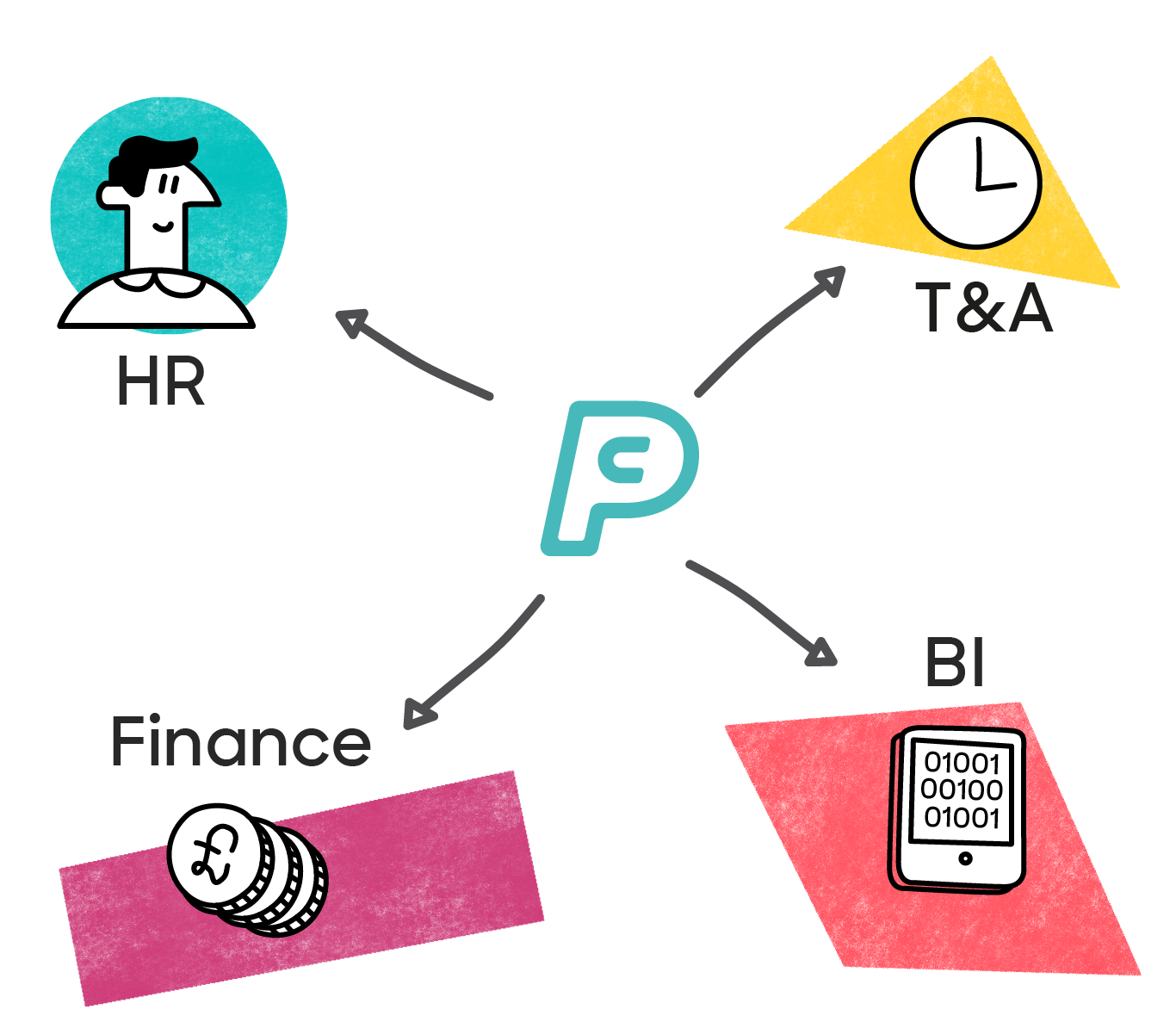
Bring payroll, people and finance data together
Key features to look for in scalable payroll software
Not every payroll feature becomes more important as organisations grow. The capabilities that matter most are those that reduce complexity, support compliance and improve visibility.
Automating payroll without losing control
One of the biggest challenges for growing organisations is maintaining accuracy as payroll volumes increase.
Manual processes often become difficult to sustain. Data entry takes longer and errors become more likely. Compliance obligations become harder to manage consistently.
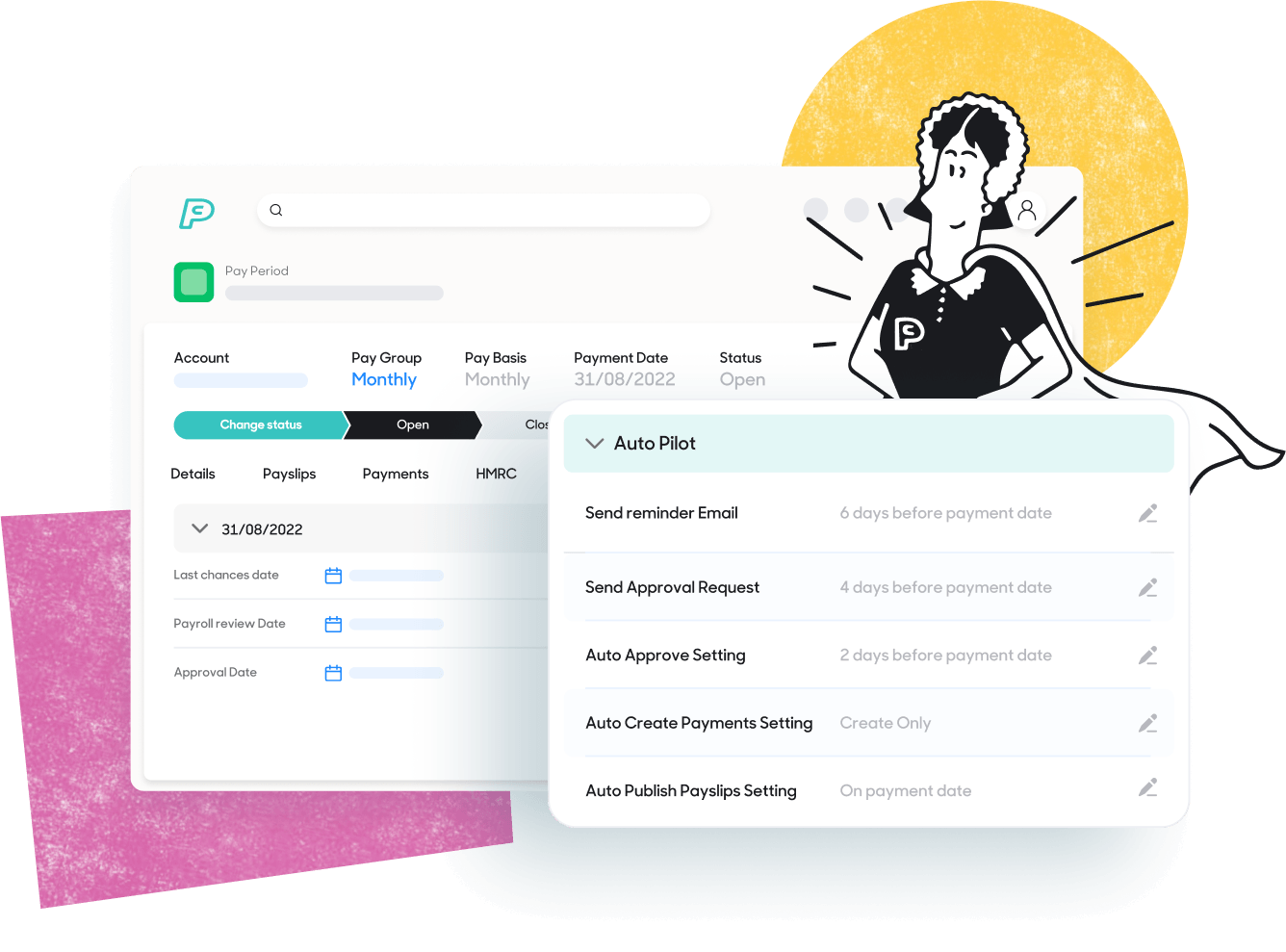
Enterprise payroll software helps address this through automation. Key capabilities include:
- Automated RTI submissions to HMRC
- Pension auto-enrolment and re-enrolment management
- Statutory payment calculations
- Automated payslip generation and distribution via mobile payroll apps
- Automated compliance updates
These features help organisations maintain consistency while reducing administrative effort.
Why cloud payroll software supports growth
Cloud-based payroll software grows with the organisation. You don’t need to buy extra servers or make major system changes each time the workforce grows.
It also means payroll teams can access information from different locations. This is useful for larger organisations with several offices, sites or remote teams.
A cloud-based payroll system helps with:
- Giving teams real-time payroll information
- Keeping payroll running if something goes wrong
- Controlling who can access payroll data
- Protecting sensitive employee information
Why employee self-service matters as organisations grow
Self-service functionality can be overlooked during payroll software selection, but it can have a significant impact on operational efficiency.
When organisations employ hundreds or thousands of people, HR and payroll teams can’t realistically manage every request manually. Employees expect digital access to their information.
Self-service portals allow employees to:
- Access online payslips
- Update personal details
- Manage expenses
- Request emergency payments or wage advances
- Split payments
- Set up payroll savings accounts
- Access customer support to make payroll queries
Self-service options reduce administrative workload while improving the employee experience.
Supporting different pay structures as organisations grow
As organisations grow, workforce arrangements often become more varied.
An payroll software platform should support:
- Multiple pay frequencies
- Overtime calculations
- Variable pay
- Commission payments
- Bonus schemes
- Benefits deductions
Flexibility matters because workforce complexity never decreases as organisations scale.
Explore payroll software designed for large organisations
How payroll software supports larger workforces
One of the biggest differences between smaller payroll environments and enterprise payroll software is the ability to manage complexity at scale.
Larger organisations require more than accurate pay calculations. They need visibility, control and access to meaningful data.
Using payroll data to support workforce decisions
Payroll data is a valuable source of business insight. Finance leaders need visibility over labour costs, HR teams need information about workforce trends and leadership teams need data to support planning and investment decisions.
Modern payroll software for large organisations provides payroll reporting tools that allow data to be analysed across multiple dimensions, including:
- Department
- Location
- Cost centre
- Employment type
- Pay structure
This helps transform payroll from a reporting function into a strategic source of workforce intelligence.
Managing payroll across multiple entities and locations
Many organisations scale through expansion, acquisition or geographic growth. As this happens, payroll often needs to support multiple legal entities, separate PAYE references and different payroll configurations.
A scalable payroll system should allow these requirements to be managed through a single platform rather than through disconnected processes or duplicated systems.
This helps maintain consistency while reducing operational complexity.
Keeping up with payroll legislation and compliance changes
UK payroll legislation changes regularly. Organisations therefore need systems that can adapt to updates affecting:
- National Minimum Wage
- National Insurance
- Statutory payments
- Pension requirements
- Employment legislation
HMRC-recognised payroll software that automatically incorporates legislative updates reduces the burden on payroll teams and helps organisations remain compliant.
How integration, reporting and governance support scalable payroll
Payroll sits between HR, finance and operational systems. The quality of those connections often determines how efficiently payroll operates.
One of the most common challenges in growing organisations is fragmented data. Employee information sits in one system and payroll sits in another. Financial reporting sits somewhere else.
The result is often manual reconciliation, duplicated effort and increased risk of error.
A payroll platform built for growth should support integration with:
- HRIS and HCM platforms
- Finance and ERP systems
- Time and attendance software
- Expenses systems
- Benefits platforms
This allows approved information to move between systems automatically, reducing manual intervention and improving data quality.
How payroll reporting supports better decisions
Reporting should do more than satisfy compliance requirements, it should provide information that supports business decisions.
- Finance teams should be able to understand workforce costs quickly
- HR teams should be able to analyse workforce trends
- Leadership teams should have access to reliable information without relying on manual spreadsheet work
The most effective platforms combine payroll compliance reporting with strategic reporting from the same data source.
Why payroll governance and audit trails matter
As organisations grow, payroll governance becomes increasingly important. Payroll software should support strong governance through:
- Role-based permissions
- Audit trails
- Approval workflows
- Secure data storage
These controls help organisations understand who made changes, when they were made and how payroll decisions were approved.
For organisations handling large volumes of payroll data, these controls are an important part of managing risk and supporting UK GDPR obligations.
Discover what's possible with a scalable payroll system
Common signs you’ve outgrown your payroll software
Understanding what can go wrong is often just as useful as understanding what to look for. Many organisations only discover the limitations of their payroll platform after growth has already exposed them.
When payroll teams start relying on workarounds
Manual workarounds are often the clearest warning sign. If payroll teams regularly export data to spreadsheets, perform manual reconciliations or make corrections outside the system, the platform may no longer be meeting organisational requirements.
Manual processes create additional risk because they depend on individual knowledge and repeated human intervention. The approach becomes increasingly difficult to sustain as payroll volumes grow.
When payroll reporting no longer gives teams what they need
Many payroll systems provide standard reports. The challenge comes when organisations need deeper insight. If finance teams can’t easily analyse payroll costs or HR teams can’t access workforce information, reporting often moves into spreadsheets and manual processes. This increases workload and creates inconsistencies between teams.
When payroll is disconnected from other business systems
Systems that don’t integrate effectively create operational bottlenecks.
Payroll teams spend more time moving data between systems and finance teams spend more time reconciling information. Errors become more difficult to identify and resolve. Over time, disconnected systems create technical debt that becomes increasingly expensive to manage.
When payroll software struggles with workforce complexity
Workforce complexity tends to increase with growth. Payroll platforms that struggle with variable pay, commission arrangements, contractors or different workforce models can quickly become restrictive. Organisations should assess how easily payroll rules and calculations can be configured without relying on vendor intervention.
Choosing payroll software that can grow with your organisation
Selecting payroll software for large organisations requires a long-term perspective. The goal is to choose a platform that can continue supporting the organisation as requirements evolve.
Start with your future payroll requirements
The evaluation process should begin with the future in mind.
Organisations should consider:
- Planned workforce growth
- Expansion into new locations
- Changes in workforce structure
- Future integration requirements
- Reporting needs
- Governance expectations
This evaluation helps ensure the selected platform remains suitable as the organisation develops.
Choose payroll software for where your business is going next
One of the most common mistakes during payroll software selection is evaluating systems against current requirements alone. Organisations that are growing should assess vendors against where they expect to be in three to five years.
Look beyond the cost of the software
Software costs extend beyond licence fees.
A complete assessment should include:
- Implementation costs
- Data migration
- Integration work
- Training
- Ongoing support
- Internal administration effort
The lowest-cost solution at the point of purchase isn’t always the most cost-effective solution over time, nor will it offer the scope of functionality.
Make sure payroll compliance is built in
Before selecting a payroll provider, organisations should confirm that the platform:
- Supports HMRC RTI submissions
- Manages pension auto-enrolment
- Updates automatically for legislative changes
- Supports relevant sector requirements
- Maintains strong compliance controls
These capabilities are critical as payroll complexity grows.
Final thoughts from PayCaptain on what to look for in payroll software as your organisation grows
The best payroll software for large organisations does far more than process pay. It supports compliance, strengthens governance, improves reporting and helps organisations manage increasing workforce complexity.
As organisations scale, payroll becomes more closely connected to HR, finance and wider business operations, which makes software selection a strategic decision rather than an administrative one.
A scalable payroll system should provide automation, integration, reporting and control while remaining flexible enough to support future growth.
For organisations managing large and growing workforces, choosing enterprise payroll software that can adapt to changing requirements is one of the most important investments they can make.
Support governance and compliance with payroll software designed for scale
.png)